
10 Warm-Weather Capsule Wardrobe Outfit Formulas
You can have plenty of clothes for warm weather and still feel like you have nothing to wear.
The problem is often not the number of pieces in your closet. It is the lack of easy combinations you can repeat without much thought. A good outfit formula gives you a simple structure, then leaves room to adjust the pieces for your climate, comfort, style, and plans.
These 10 formulas are designed to help you make more outfits from clothes you already own. You don’t need every item mentioned, and you don’t need to copy any formula exactly. Treat each one as a starting point.
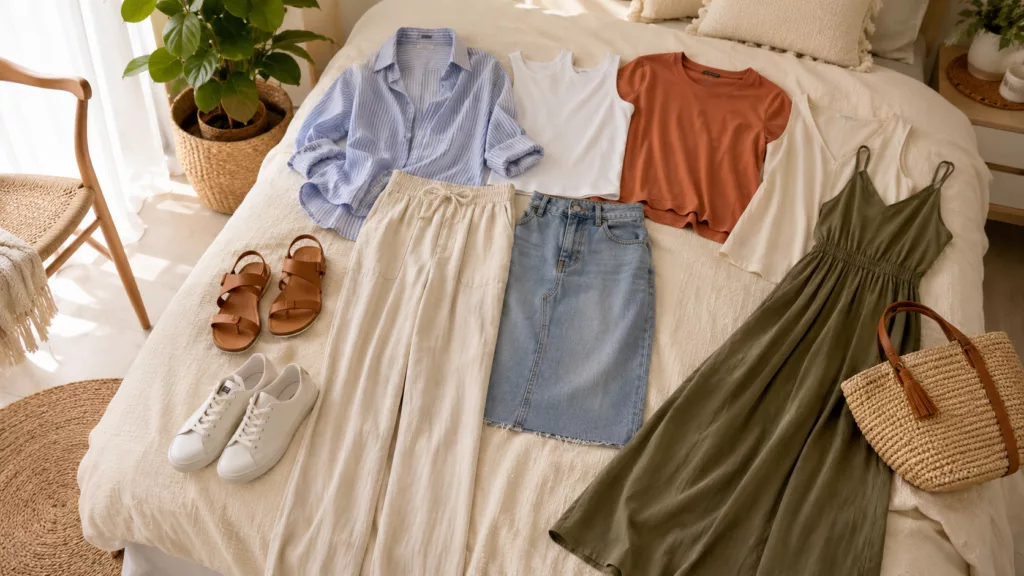
What Is an Outfit Formula?
An outfit formula is a repeatable combination of clothing categories. It might be as simple as a top, relaxed trousers, and practical shoes.
The formula gives you a structure, not a uniform. You can change the sleeve length, fabric, coverage, shoes, or accessories while keeping the basic idea intact.
That flexibility is what makes formulas useful in a capsule wardrobe. They help you see more combinations without requiring you to buy a completely new look.
Related guide: What Is a Capsule Wardrobe?
Shop Your Closet Before You Shop for Clothes
Before you decide that a formula requires something new, try building it with the closest pieces you already own.
A sleeveless blouse can stand in for a tank. A casual skirt can replace shorts. Sneakers may work better for your day than sandals. A lightweight cardigan can fill the same role as an open button-down.
The goal is not to create a perfect copy. It is to test whether the structure works for your real life. Once you have tried the formula, you can see whether the problem is fit, fabric, color, shoes, layering, or a genuine wardrobe gap.
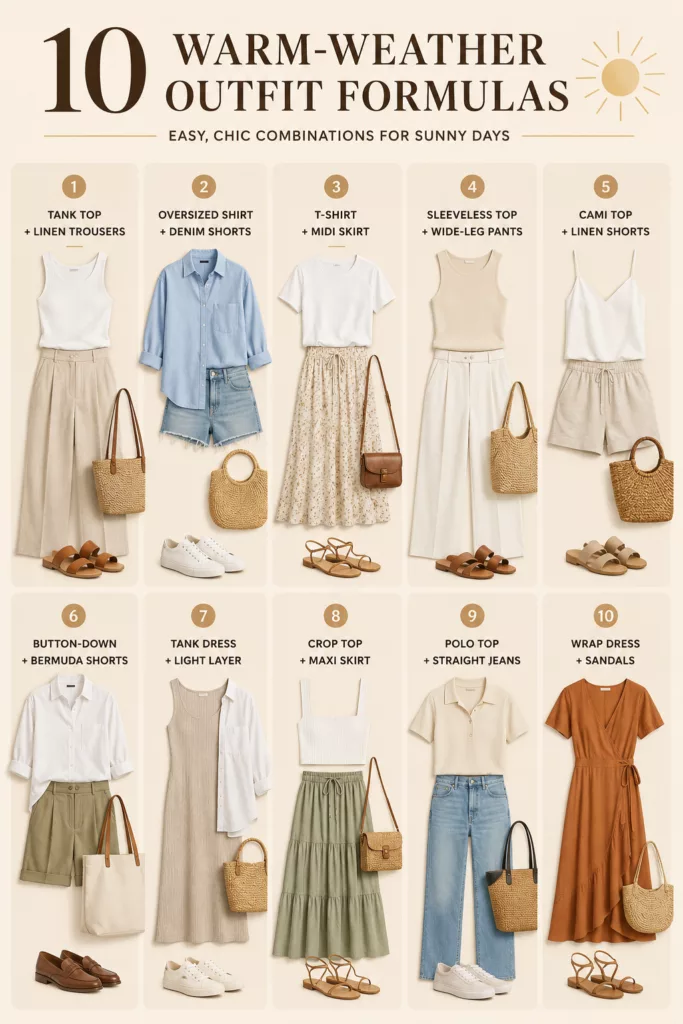
Formula 1: Simple Top + Relaxed Trousers + Comfortable Sandals
Start with a simple top you already reach for, then add relaxed trousers and comfortable sandals.
This works because each piece has a clear job. The top keeps the outfit uncomplicated, the trousers add ease and coverage, and the sandals keep the look appropriate for warm weather.
Try a tee, tank, sleeveless blouse, or short-sleeve knit. Swap sandals for sneakers or flats when you need more support or a slightly more polished finish.
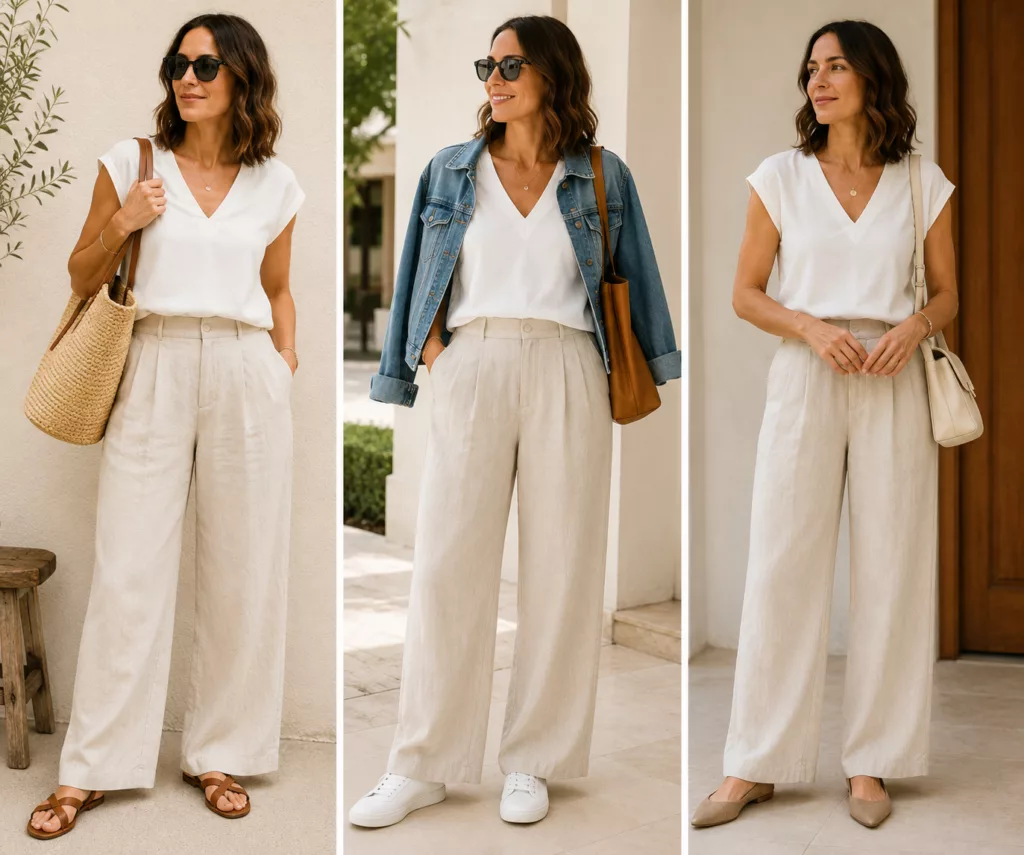
Formula 2: Tee or Tank + Shorts + Open Lightweight Shirt
This formula gives you an easy base outfit with a removable layer.
Choose shorts you can sit and move in comfortably, then add a tee or tank. Wear a lightweight button-down open over the top for sun coverage, air-conditioned spaces, or a little more visual structure.
The open shirt does not need to be linen. Cotton, gauze, chambray, or another breathable fabric can work just as well.
Formula 3: Easy Dress + Practical Shoes + Optional Layer
A simple dress can be one of the easiest warm-weather formulas because the main outfit is already complete.
Add shoes that match the amount of walking or standing you expect to do. Then bring a light layer if your day includes cool indoor spaces, changing weather, or extra sun exposure.
The best dress for this formula is not necessarily the dressiest one. It is the one you can wear comfortably for several hours.
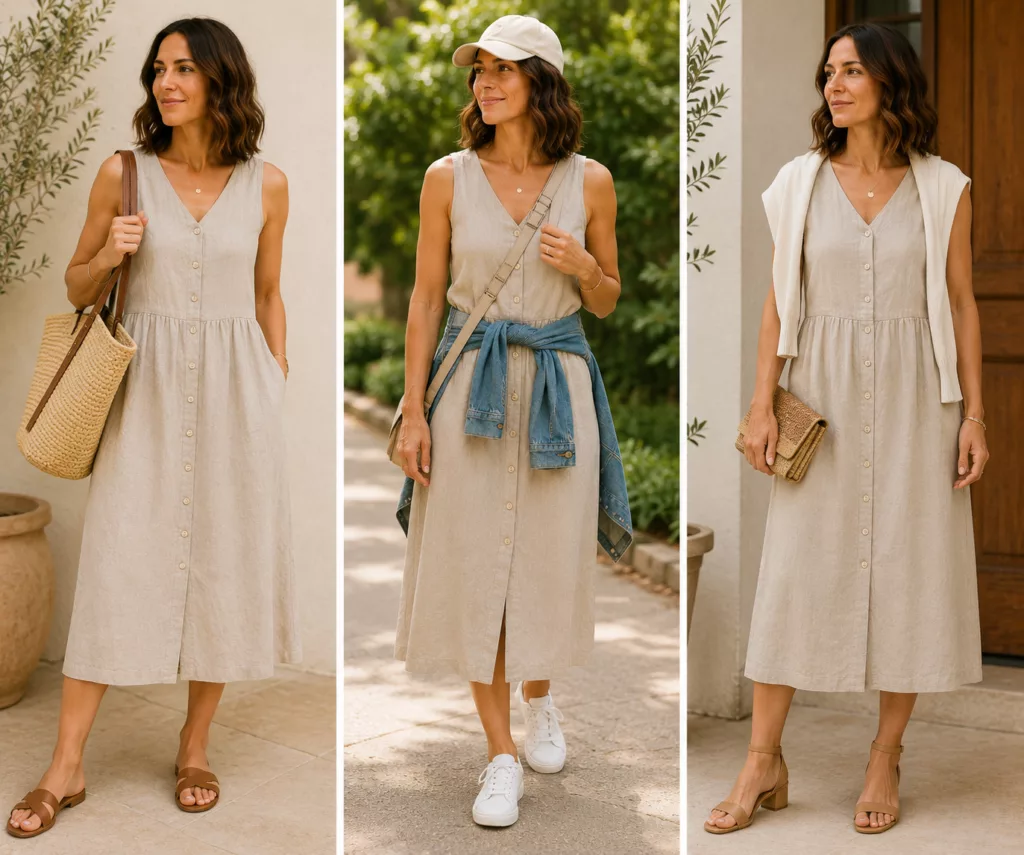
Formula 4: Sleeveless or Short-Sleeve Top + Midi Skirt + Flat Shoe
This formula is useful when you want movement and airflow without wearing shorts.
A simple top balances the visual volume of a midi skirt, while a flat shoe keeps the outfit practical. You can tuck the top, half-tuck it, or leave it untucked depending on the proportions that feel best.
Try sneakers for a casual version, sandals for hot days, or a refined flat when you want the same formula to feel more polished.
Formula 5: Button-Down Shirt + Shorts, Trousers, or a Skirt
A lightweight button-down can do more than one job in a warm-weather wardrobe.
Wear it buttoned as a top, open as a layer, tied at the waist, or partially tucked. Pair it with whichever bottom best fits the day: shorts, trousers, or a skirt.
Because the shirt can shift roles, it is a useful piece to test before buying another specialized top or layer.
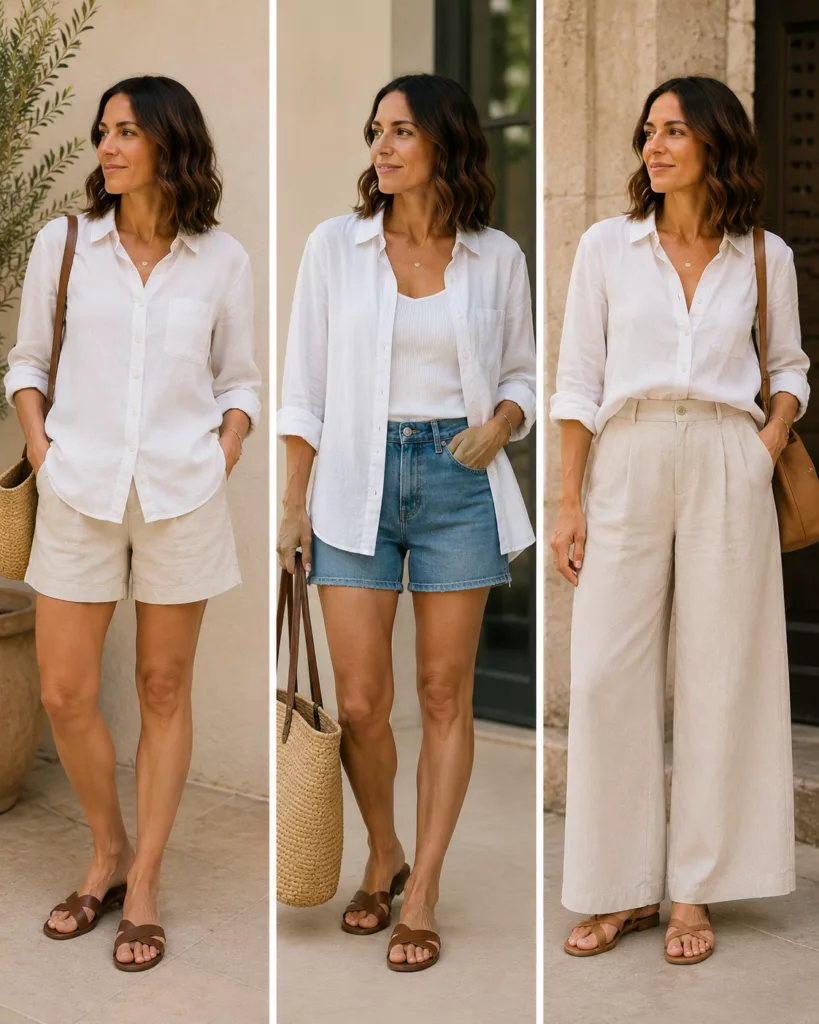
Formula 6: Matching or Tonal Separates + Simple Accessories
Matching separates can create the ease of a one-piece outfit while giving you more ways to rewear each item.
The pieces do not need to be a formal set. Two items in the same color family can create a similar effect. Try cream with tan, olive with sage, navy with muted blue, or two shades of brown.
Keep accessories simple so the tonal combination remains the main idea.
Formula 7: Lightweight Blouse + Easy Trousers + Polished Flat
Use this formula when a tee feels too casual but you still need comfort.
A lightweight blouse adds softness or structure, while easy trousers keep the outfit wearable for a longer day. A polished flat finishes the combination without making it feel formal.
Look for breathable fabrics and enough room through the shoulders, waist, and hips. An outfit is not useful if it only works while standing still.
Formula 8: Untucked Top + Straight Bottom + Simple Shoe
Not every outfit needs to be tucked, belted, or carefully shaped.
An untucked top can work well with a straighter bottom, especially when the top ends near the high hip or has a clean hem. Add a simple shoe and let the proportions do the work.
This is a good formula for days when you want minimal fuss or prefer less emphasis at the waist.
Formula 9: Monochrome Base + One Contrasting Detail
Choose a top and bottom in the same color family, then add one contrasting detail.
The contrast might come from shoes, a bag, a light layer, or a small accessory. Keeping most of the outfit visually connected can make simple pieces feel intentional.
You do not need an all-black or all-beige wardrobe. Monochrome can mean rust with terracotta, olive with sage, navy with denim blue, or cream with warm white.
Formula 10: Comfortable Long-Day Outfit + Removable Layer
Build this formula around the demands of the day rather than the appearance of one isolated outfit.
Start with a comfortable base: a breathable top, a bottom you can move in, and shoes suitable for the expected walking or standing. Add a removable layer for changing temperatures.
This formula is especially useful for travel days, errands, appointments, events with indoor and outdoor portions, or any schedule that lasts longer than a quick outing.
Try the Three-Outfit Test Before You Buy Anything
If you think you need a new piece, test that idea before you shop.
Choose one garment you already own and build three outfits around it. Try each outfit on, not just in your head. Notice where the friction appears.
Is the missing piece really a top, or do the shoes make every combination feel wrong? Is the color difficult to combine, or is the fit uncomfortable? Would a different layer solve the problem? Could one existing item be altered, repaired, or styled differently?
Change one variable at a time. When you can name the specific problem, you are much more likely to identify a useful wardrobe gap instead of buying another random piece.
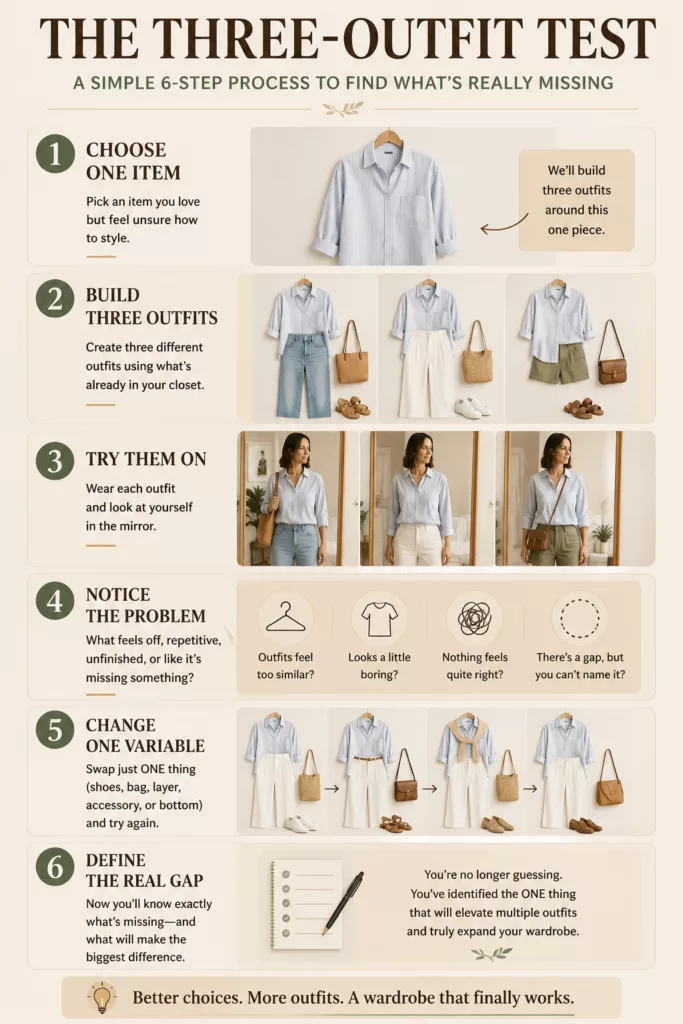
Looking for One Missing Piece?
Disclosure: This section contains an eBay affiliate link. If you make a purchase through this link, I may earn a commission at no additional cost to you.
After testing three outfits, you may find that one specific piece would make several combinations work better. Start with the exact gap you identified rather than browsing broadly.
When a breathable layer is the genuine gap in your wardrobe, look for a lightweight button-down that works both buttoned and open over several outfits. Check the fabric, measurements, condition, and care instructions before buying.
Browse Ralph Lauren linen button-down shirts on eBay
Common Outfit-Formula Mistakes
Treating the formula like a rule. The formula should support your life, not force you into one exact silhouette or styling choice.
Ignoring the weather you actually experience. Warm weather can still include strong sun, cool mornings, air conditioning, humidity, wind, or sudden rain. Build for your conditions.
Choosing shoes last. Shoes can determine whether an outfit is useful for two hours or ten. Include them when you test the formula.
Buying the missing piece before testing alternatives. Use the closest pieces you already own first. The test often reveals a different problem than the one you expected.
Building for an imaginary lifestyle. A useful capsule wardrobe should support the places you actually go and the activities you actually do.
Frequently Asked Questions
How many outfit formulas do I need?
You may only need three or four formulas for your most common days. Start with the combinations you can repeat easily, then add another formula when it solves a real need.
Can outfit formulas work in very hot or humid weather?
Yes. Keep the structure and adjust the fabric, coverage, fit, and footwear. Breathable fabrics, looser shapes, sun protection, and comfortable shoes may matter more than copying a specific look.
Do all the colors in a capsule wardrobe need to match?
They do not need to match perfectly. They need enough overlap to create useful combinations. A few connected color families are often more practical than forcing every item into one strict palette.
What should I buy first for a warm-weather capsule wardrobe?
Begin by identifying the outfit formulas you already wear and the specific point where they stop working. The most useful purchase is usually the piece that solves several proven combinations, not the item that looks most exciting by itself.
Can I use these formulas without having a minimalist wardrobe?
Yes. Outfit formulas are useful in wardrobes of many sizes. Their purpose is to reduce decision-making and help you combine what you own more intentionally.
Build Outfits for the Life You Actually Live
A warm-weather capsule wardrobe does not need to look identical to anyone else’s. It needs to help you get dressed for your climate, your comfort needs, your schedule, and your style.
Start with one or two formulas that already feel close to the way you dress. Build them from your closet, wear them, and notice what makes them easier or harder. Then adjust one piece at a time.
The goal is not to own the smallest possible wardrobe. It is to create a wardrobe that gives you enough useful combinations without making every morning feel like a new problem.
Read next: How to Build a Capsule Wardrobe for Warm Weather
Coming soon: The Peak Pursuits guide to new and secondhand capsule wardrobe options.
Join the Conversation
What outfit formula, wardrobe staple, or styling challenge are you working on right now? Share your thoughts in the comments—I’d love to hear what is working for you and what you are still trying to figure out.
Explore Peak Pursuits Marketplace
Looking for secondhand wardrobe staples and natural-fiber pieces? Explore the current Peak Pursuits Marketplace inventory. Availability changes as individual items sell, so check each listing’s measurements, fabric details, condition, shipping, and return terms before purchasing.
I regularly source premium brands, classic wardrobe essentials, linen pieces, cotton staples, and unique resale finds for Peak Pursuits Marketplace.
Marketplace note: Peak Pursuits Marketplace is my curated resale shop. Inventory changes as individual items sell.