
What to Buy New vs. Secondhand for a Fall Capsule Wardrobe
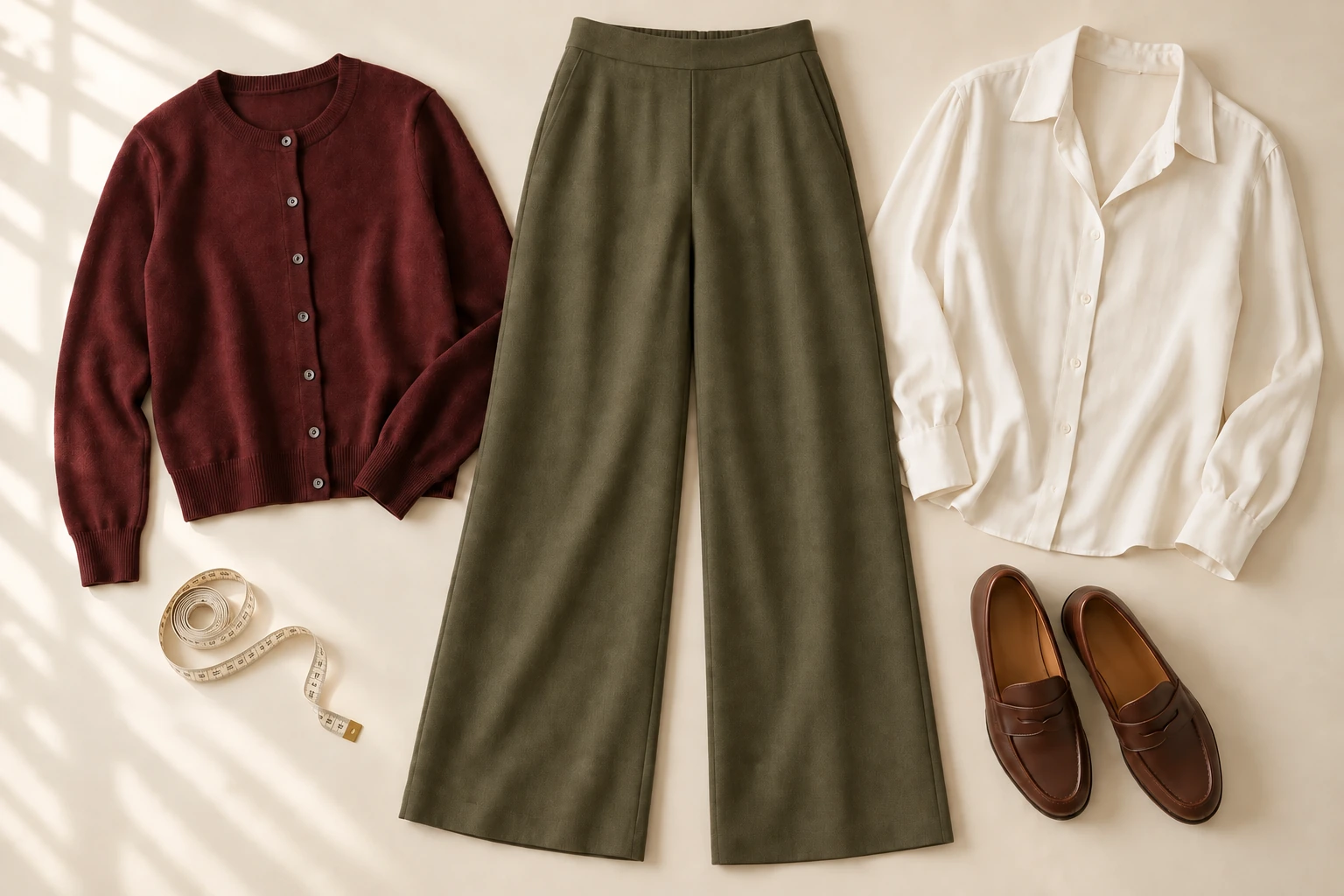
Once you’ve found a real gap in your fall wardrobe, look secondhand first for a piece that fits the way you dress. A cardigan, pair of trousers or jacket earns its place when its condition, measurements and total cost work for you—not simply because it is a bargain.
When deciding what to buy new vs. secondhand for a fall capsule wardrobe, use those checks to find secondhand pieces you can confidently wear. Consider buying new when the available secondhand options do not meet a specific need, such as fit, timing or suitable return terms. If neither route gives you a useful garment, keep looking.
If you’re still deciding what’s missing, use the fall capsule wardrobe guide first. The comparison below starts after that decision, with a specific job for the garment already in mind.
Compare the purchase against the same needs
Write down the details that would make the item useful: the occasions you’ll wear it, the clothes it must work with, your fit requirements and the most you’re comfortable spending in total. “Washable trousers for office days, with enough room to sit comfortably” is a more useful starting point than “better fall basics.”
Use the same requirements for both shopping routes. A desirable label doesn’t make an unsuitable secondhand garment useful, and an unworn item still needs to earn its place in your wardrobe.
Scroll sideways to compare all three columns.
| Your need | Consider secondhand when | Consider new when |
|---|---|---|
| Clear condition | Photos and answers show wear you accept. | You can inspect an unworn option that meets your needs. |
| Specific fit | Measurements compare well with a useful garment you own. | The required fit is available and you can try it or use suitable returns. |
| Manageable cost | Its total cost is lower for a garment that meets your needs. | The total is competitive once any secondhand work is included. |
| A real deadline | A suitable item can reach you in time. | An available option meets the deadline and your requirements. |
| Too much uncertainty | Wait if condition or fit remains unclear. | Wait if being new is its only advantage. |
These are reasons to consider an option, not guarantees attached to its condition label. Read the actual description, measurements and terms before choosing.
Check what the condition description leaves out
“Good condition” needs detail. Look for clear front and back views, close-ups of areas that receive wear, and photographs of the fabric and care labels. Ask about anything that matters to your decision but isn’t shown. Photos can show a hole or stain, but they can’t establish how fabric feels against your skin. Ask the seller about odors; you’ll still need to decide whether buying without an in-person check is acceptable.
For a knit, examine the underarms, elbows, cuffs and hem. For trousers, check the seat, inner thighs, waistband and hems. On a coat or jacket, look at the lining, pocket openings and fastenings. Ask whether buttons and zippers work and whether the garment has been altered or repaired.
Separate a flaw you can accept as it is from a project you’re hoping to fix. If a faint mark would stop you wearing the item, don’t buy it on the assumption that washing will remove it. If a repair is essential, get a realistic assessment and cost before committing.
A secondhand knit can work when the fabric still suits the job
Pilling is the small balls of fiber you see on a fabric’s surface. Woolmark explains that rubbing during wear can cause pilling, often around areas such as elbows and underarms. A few pills and a worn-through elbow are different observations, so inspect both the surface and the fabric beneath it.
For a cardigan you expect to wear regularly, look for clear photos of its shape and high-wear areas, then check the measurements. Pass if the seller can’t clarify suspected holes, thinning or distortion that would affect how you use it. Buying new may be more practical if the secondhand options leave those questions unresolved, but inspect the new garment too.
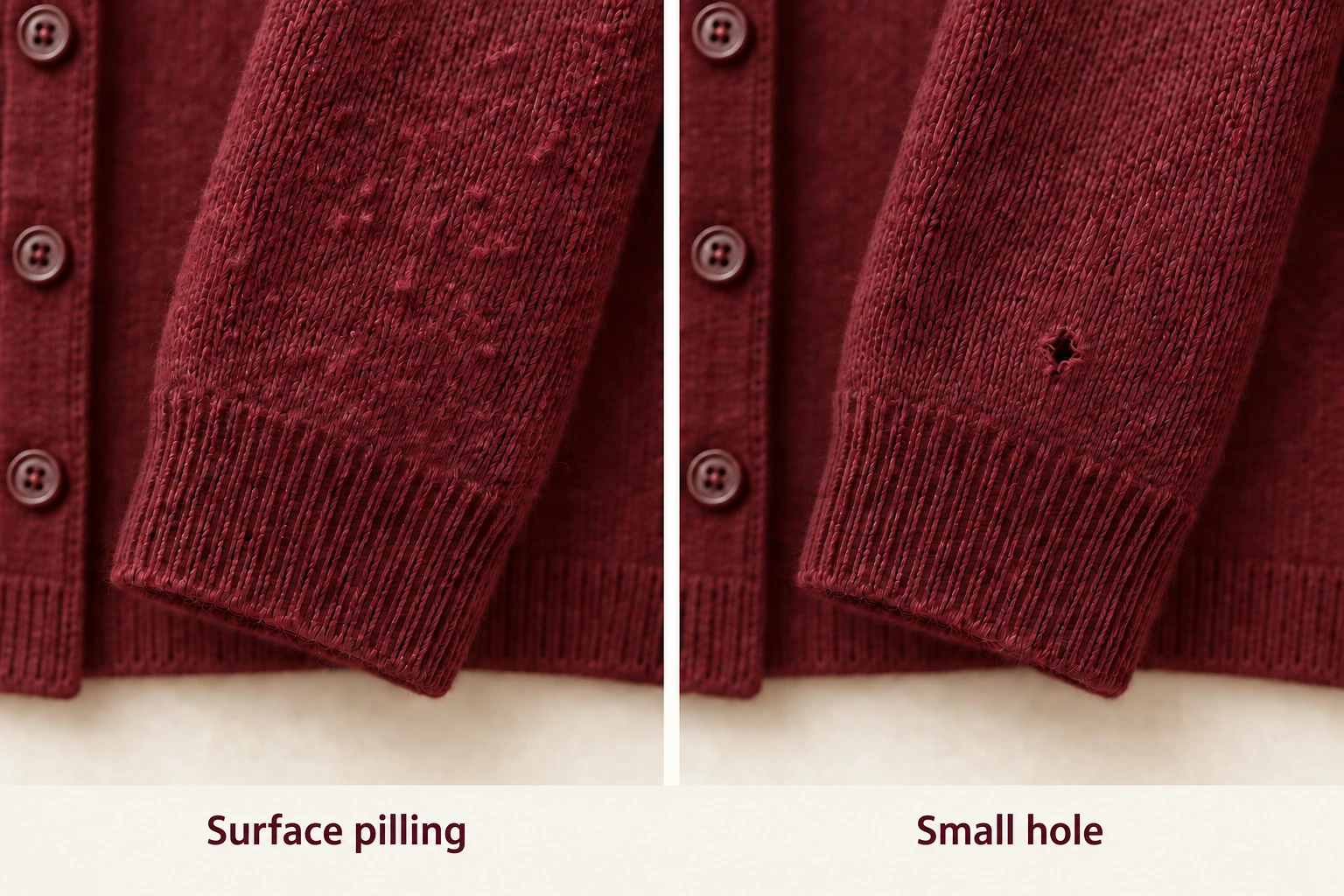
Read the composition and care labels together. A wool label alone doesn’t tell you how a particular knit will feel or how much care you’ll tolerate. Woolmark’s care guidance directs readers to the garment’s own care instructions. Choose a routine you’ll actually follow; don’t plan to wash an unfamiliar knit by a method its label doesn’t support.
Compare measurements before trusting the size label
Use a similar garment that already fits the way you like as your reference. Lay it flat without stretching it, fasten it as appropriate and measure at the same points used in the listing. Ask for a photo showing the tape placement if the method is unclear.
For tops, useful checks include the width across the chest, body length and sleeve length. For trousers, compare the waistband, hips, rise (from the crotch seam to the waistband) and inseam (along the inner leg to the hem). Confirm whether a listed rise is measured at the front or back. Focus on the dimensions that usually determine your comfort rather than collecting numbers without a purpose.
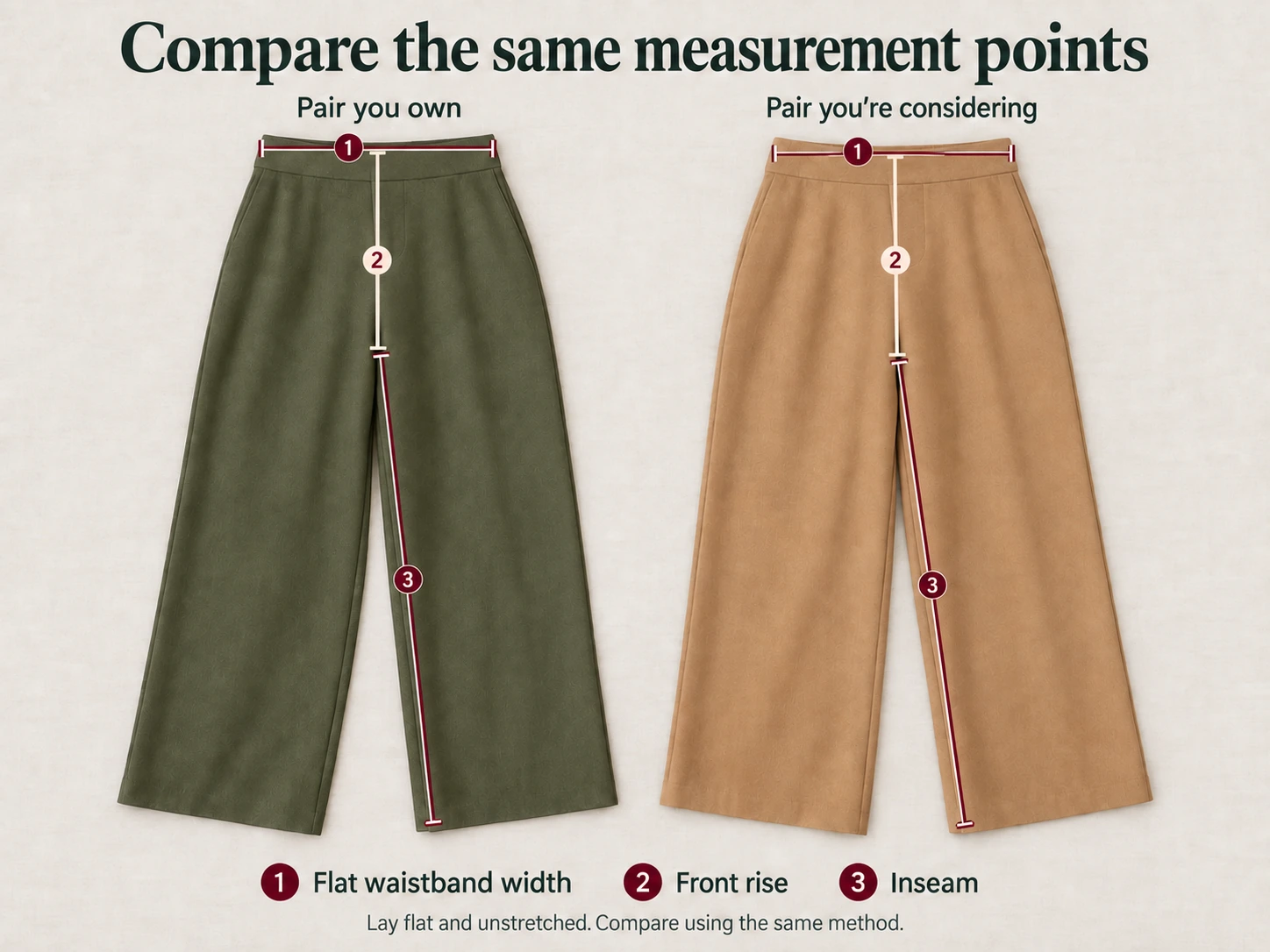
1: Flat waistband width. 2: Front rise, from the crotch seam to the top of the front waistband. 3: Inseam, from the crotch along the inner leg to the hem. Flat width is not circumference.
Make sure you’re comparing garment dimensions with garment dimensions. Check what each number describes: a flat width, a full circumference or a recommended body measurement. If the listing doesn’t make that clear, ask the seller before using the number to judge fit.
Measurements reduce uncertainty; they don’t describe every part of fit. Two garments with similar dimensions may feel different because of their shape, stretch or construction. Where possible, try the item on, sit down and move in it. For an outer layer, wear the sort of clothing you intend to put underneath it.
Trousers are worth comparing beyond the waist
Suppose you need trousers for days spent sitting at a desk. A secondhand pair with the right waist measurement could still have an uncomfortable rise or too little room through the hips. Compare it with trousers you already wear for that purpose, and check for alterations that may have changed the original fit.
Treat “I can have them tailored” as a separate decision. Ask a tailor whether the needed change is feasible and what it would cost. If you’re relying on major fit changes without that information, keep looking. A new option with the required size and an acceptable return policy may be the more useful purchase even if its ticket price is higher.
Use extra care with outerwear and footwear
A secondhand jacket is worth considering when its measurements, condition and care needs are clear. Check that the lining and closures are usable and that any visible wear is acceptable to you. Don’t assume an attractive exterior proves the whole garment is in good shape.
If you need rain protection rather than an everyday layer, ask for the exact model and consult its manufacturer’s specifications and care guidance. Photos alone don’t establish current waterproof performance. A technical requirement is a reason to seek better evidence, whichever shopping route you choose.
Footwear deserves a close look at the soles, heels, uppers, interior and the places where parts join. Request additional views if those areas aren’t shown. When shopping in person, try the shoes with appropriate socks and walk in them. REI’s used-gear guidance also recommends trying used footwear and checking purchase terms.
A lightly worn pair you can inspect and try may be a reasonable option. If the photos suggest uneven wear, separation or damage you can’t assess, pass or seek a cobbler’s opinion before buying. New shoes still need to fit comfortably, and the return terms matter if you’re ordering without trying them on.
When buying new clothes is worth considering
Buying new can make sense when a particular retailer has the size or fit you need, lets you try the garment, or provides terms that make the remaining uncertainty manageable. It can also be practical when a genuine need has a deadline and a suitable secondhand option hasn’t appeared.
Be specific about the benefit you’re paying for. An available inseam and a suitable exchange policy may justify choosing new. Longer life is harder to predict from the condition label alone.
Your preferences count too. You may want to buy underwear, socks or other close-to-skin items unworn. You don’t need to turn that preference into a universal rule for every shopper. Check whether final-sale restrictions apply before relying on a return option.
On eBay, returns depend on the listing terms and the reason for the return. A change-of-mind return is different from a potentially eligible claim involving an item that doesn’t match its description. Read the current policy, time limit and shipping responsibilities; don’t treat buyer protection as a promise that an accurately described garment can be returned because you dislike the fit.
Work out what the garment will cost to use
Compare the checkout total, including shipping and tax, then add any immediate cleaning, alteration or repair costs you would need to make the item wearable. Keep optional improvements separate from essential work. An inexpensive purchase can become poor value if you can’t use it until you’ve paid for several changes.
To decide whether a secondhand find fits your budget, add up what it will cost to make it ready to wear. In this hypothetical example, $32 trousers plus $10 shipping and tax and a quoted $20 hem total $62. A suitable new pair costing $70 would be $8 more. The secondhand pair may still be the one you prefer; use the complete cost alongside its condition, fabric and fit to make that choice.
Expected wear can help you think through value, provided you keep the estimate honest. At 40 wears, those $62 trousers would cost $1.55 per wear before ongoing care. At 10 wears, they’d cost $6.20. Neither figure predicts how long they’ll last. The useful question is whether your normal week gives you enough reasons to reach for them.
Set a stopping point for the search as well as a spending limit. If you’ve found only compromised options, waiting is a valid result. A gap can remain on your list until a garment meets it without creating another problem.
Questions about buying new and secondhand
What clothes are worth buying secondhand
Start with the item you need, then assess the individual garment. Knits, trousers and jackets are candidates when you can judge condition, compare measurements and accept the care involved. A familiar category or expensive brand isn’t enough to make a particular piece worthwhile.
Is secondhand always cheaper
Compare total cost with a suitable new alternative available to you. Include necessary work and purchase costs, and don’t use the item’s original retail price as proof of today’s value. The cheaper option only helps if you’ll wear it.
Should I reject every sweater with pilling
Look more closely before deciding. Surface pills don’t answer whether the knit has holes, thinning or an altered shape. If you would need to remove the pills to enjoy the sweater, check an appropriate care method and decide whether you want that work. Don’t assume a fabric shaver will make every knit look new.
What if the seller cannot provide measurements
Decide whether you have another dependable way to assess fit, such as trying the garment in person. If fit is uncertain and the purchase terms won’t let you resolve that uncertainty, pass. A low price isn’t a substitute for information you need.
Can I mix new and secondhand pieces in one capsule
Yes. Make each purchase serve your wardrobe rather than a rule about where everything must come from. You might find the right secondhand cardigan and buy new trousers because the available fit works better. Both should earn their place through actual use.
Choose the item you can confidently wear
Before paying, return to the job you wrote down. Can you explain why this garment meets it, what you’ve checked and what uncertainty you’re accepting? Use those answers to make your choice. If you’re still counting on an unconfirmed repair, a different fit or a care routine you don’t want, keep the money and continue the search later. Start with secondhand, and let the details guide the purchase. Choose the piece you can confidently wear, whether you find it now or need to keep looking.
What to read next: If you’re unsure whether the purchase solves a real gap, return to How to Build a Fall Capsule Wardrobe and check what your existing clothes can already do before adding another piece.
Join the conversation: Which detail is hardest for you to judge when buying secondhand clothes—fit, condition or the cost of making them ready to wear?
As an eBay Partner, I may earn a commission if you buy through the link below, at no extra cost to you.
Shop my curated finds: If you have a specific gap in mind, keep your measurements and condition checklist beside you as you browse my curated finds at Peak Pursuits Marketplace. Choose only a piece that meets those needs, and feel free to leave the gap open if nothing fits.