
How to Build a Fall Capsule Wardrobe: What to Keep, Add, and Skip
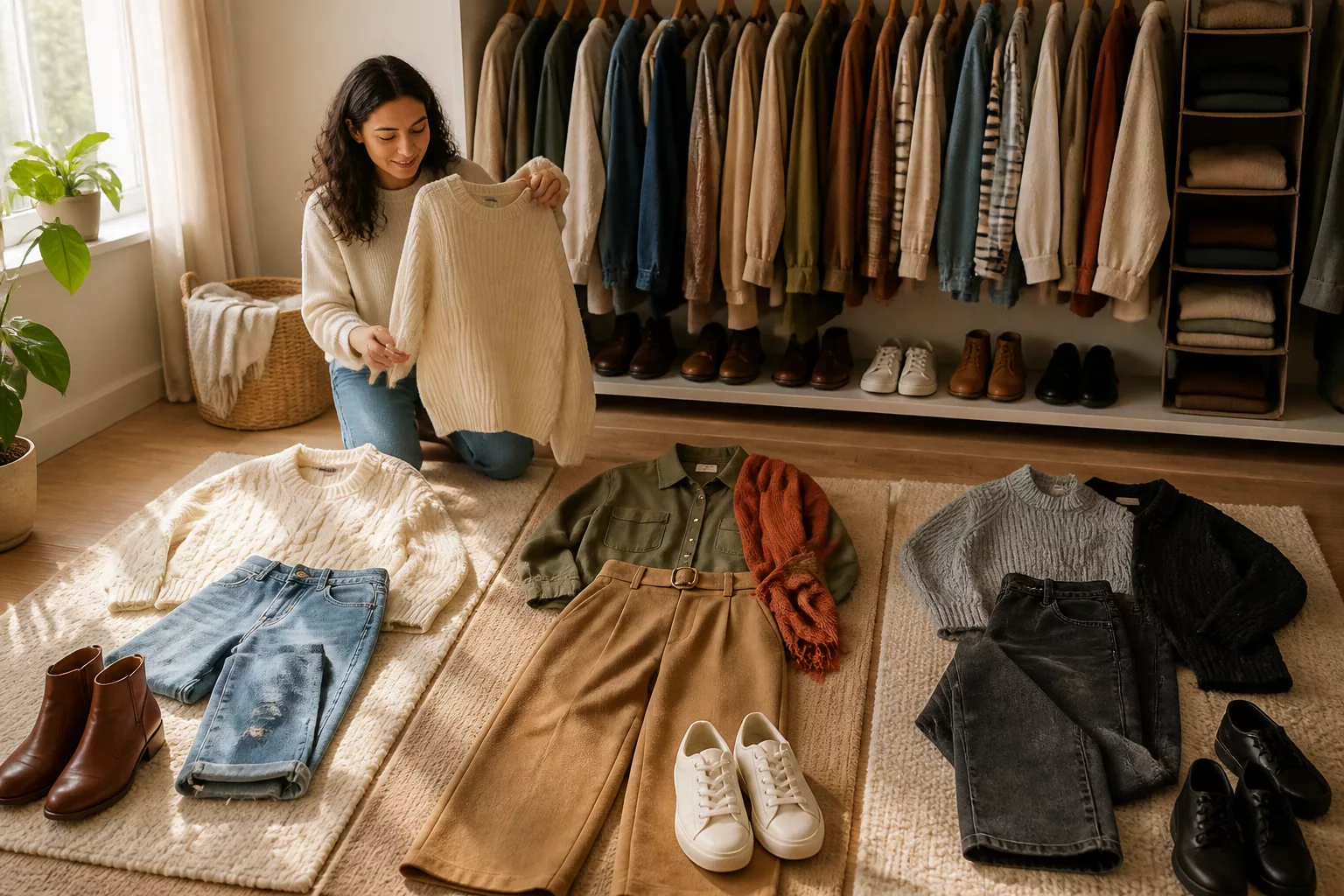
A fall capsule wardrobe should make getting dressed easier. It should not require replacing everything you own, following a rigid checklist, or buying an entirely new collection every September.
The most practical place to begin is your existing closet.
Many of the clothes you wore during summer can continue into fall with a change in shoes, texture, or layering. Other pieces may need to be stored until warmer weather returns. Only after you test what remains should you decide whether anything is genuinely missing.
This keep, add, and skip approach helps you create a fall wardrobe that fits your climate, routine, and personal style—not someone else’s shopping list.
Start With Your Real Fall
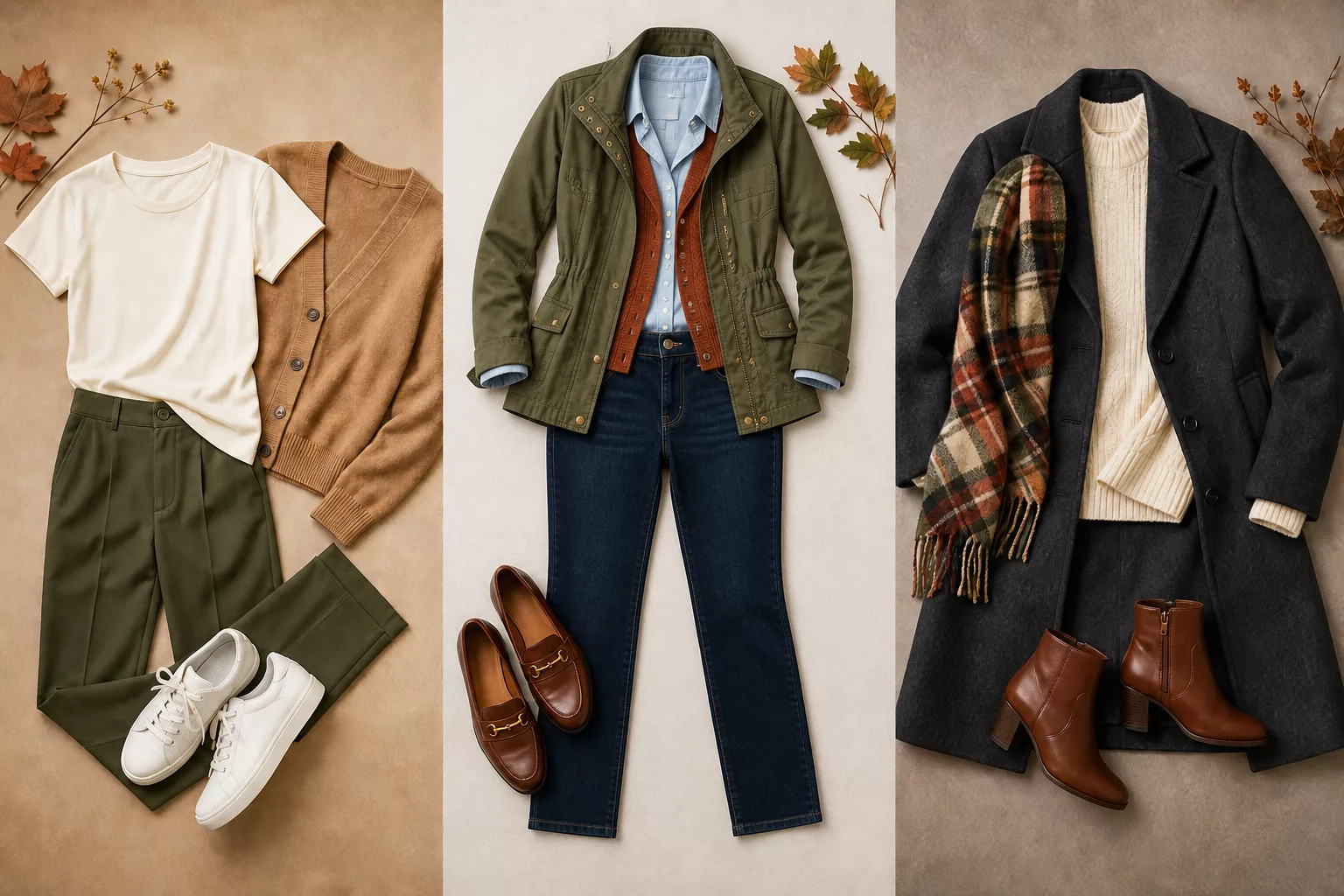
“Fall weather” can mean cool mornings and warm afternoons, weeks of rain, early snow, or temperatures that still feel like summer.
Before choosing clothes, consider:
- The temperatures you normally experience.
- How much conditions change during the day.
- Whether you walk, commute, or spend most of your time indoors.
- What you wear for work, errands, weekends, and social occasions.
- How often you do laundry.
- Whether your daily life is casual, polished, outdoors-focused, or a combination.
Someone experiencing a mild fall may need lightweight knits and one practical jacket. Someone in a colder climate may need warmer layers, weather-resistant footwear, and an earlier transition into winter outerwear.
Your capsule should respond to your actual conditions.
What to Keep From Your Existing Wardrobe
Begin by pulling out the clothes that could reasonably work during fall. Do not worry about reaching a specific number.
Good candidates may include:
- T-shirts and long-sleeve tops
- Button-down shirts
- Jeans and casual trousers
- Skirts and dresses
- Lightweight sweaters and cardigans
- Casual jackets
- Sneakers, loafers, flats, or boots
- Scarves and other functional accessories
Some of these may have been part of your warm-weather capsule wardrobe. A white T-shirt, denim shirt, midi dress, or relaxed pair of trousers does not become unusable when the calendar changes. It may simply need a different supporting piece.
Evaluate each item using five questions:
- Does it fit comfortably now?
- Does it suit my current lifestyle?
- Is it appropriate for my fall weather?
- Can I wear it with several other pieces?
- Would I willingly wear it within the next two weeks?
If the answer is yes, it has earned consideration for the capsule.
You do not need to love every piece in a dramatic way. Dependable basics can be valuable. However, something should contribute more than convenience on a hanger. It should feel comfortable, work with the rest of the wardrobe, and help you create outfits you will actually wear.
Use a Keep, Add, and Skip System

Instead of dividing your wardrobe into “fashionable” and “unfashionable,” sort it by function.
Keep
Keep an item in the active fall wardrobe when it:
- Fits your body and feels comfortable.
- Works for your real activities.
- Coordinates with several other pieces.
- Can handle the expected weather.
- Is in wearable condition.
- Helps complete more than one outfit.
A useful item does not have to be a neutral basic. A colorful sweater, printed skirt, or distinctive jacket can belong in a capsule when it works with the rest of your clothes and reflects your style.
Add
Consider adding something only when you can identify the specific problem it will solve.
A legitimate gap might sound like:
- “I have several tops but no layer that fits comfortably over them.”
- “My everyday shoes are not suitable for wet weather.”
- “I need one outfit that works for a business-casual office.”
- “My two warm sweaters are too heavy for most afternoons.”
- “None of my jackets work with both trousers and dresses.”
This is more useful than deciding you need “fall essentials” because they appeared on a seasonal list.
Write down each possible gap, then test your existing wardrobe before shopping. You may discover that you already own a workable solution.
Skip
Skip an item when it:
- Duplicates something you already use.
- Works with only one outfit.
- Requires additional purchases before it becomes useful.
- Suits an imagined lifestyle rather than your real one.
- Is uncomfortable, difficult to maintain, or wrong for your climate.
- Is appealing mainly because it is new or temporarily popular.
- Does not solve a confirmed wardrobe gap.
A sale price does not make an unnecessary item useful. Neither does calling it a classic.
Build Around Functions, Not a Magic Number
There is no universal number of pieces that makes a wardrobe a capsule.
Your appropriate total depends on your climate, schedule, laundry routine, and preferred amount of variety. Instead of trying to reach 20, 30, or 40 pieces, make sure the wardrobe covers the functions you need.
Foundation tops
Choose tops that can be worn alone and beneath other layers. These might include T-shirts, tanks, lightweight long-sleeve shirts, or fitted base layers.
Shirts and blouses
A button-down, relaxed blouse, denim shirt, or other structured top can bridge casual and slightly dressier situations.
Adaptable layers
Consider cardigans, lightweight sweaters, overshirts, vests, or casual blazers. The most useful layers fit comfortably over your foundation tops and beneath your outerwear.
Versatile bottoms
Jeans, trousers, skirts, and other bottoms should coordinate with several tops and work for your normal activities.
Dresses or one-piece options
A dress is optional, not mandatory. If you enjoy wearing dresses, look for one that can work with different shoes or layers as temperatures change.
Outerwear
Choose outerwear based on weather rather than a generic checklist. Your solution could be a denim jacket, utility jacket, trench, raincoat, leather jacket, or warmer coat.
Shoes
Your shoes need to match both your wardrobe and your routine. Consider comfort, walking, precipitation, dress requirements, and the temperatures you actually experience.
Functional accessories
Scarves, belts, bags, tights, hats, and other accessories can expand the wardrobe, but they should not be used to disguise missing foundations.
Choose Colors From Clothes You Already Wear
A capsule wardrobe does not have to be beige, black, white, and gray.
Start by looking at the colors in your most frequently worn clothes. Identify two or three foundation colors that already coordinate, then add one or two accent colors if they help the wardrobe feel like you.
For example, your foundation might include denim, cream, and brown, with rust and deep green as accents. It could just as easily include navy, charcoal, and burgundy—or black, ivory, and bright blue.
The goal is coordination, not conformity.
Texture can also create a fall feeling without requiring an entirely new palette. Denim, corduroy, wool, suede, leather, brushed cotton, and knit fabrics can add depth, but only include textures that are comfortable and practical for your life.
Test Outfits Before You Buy Anything
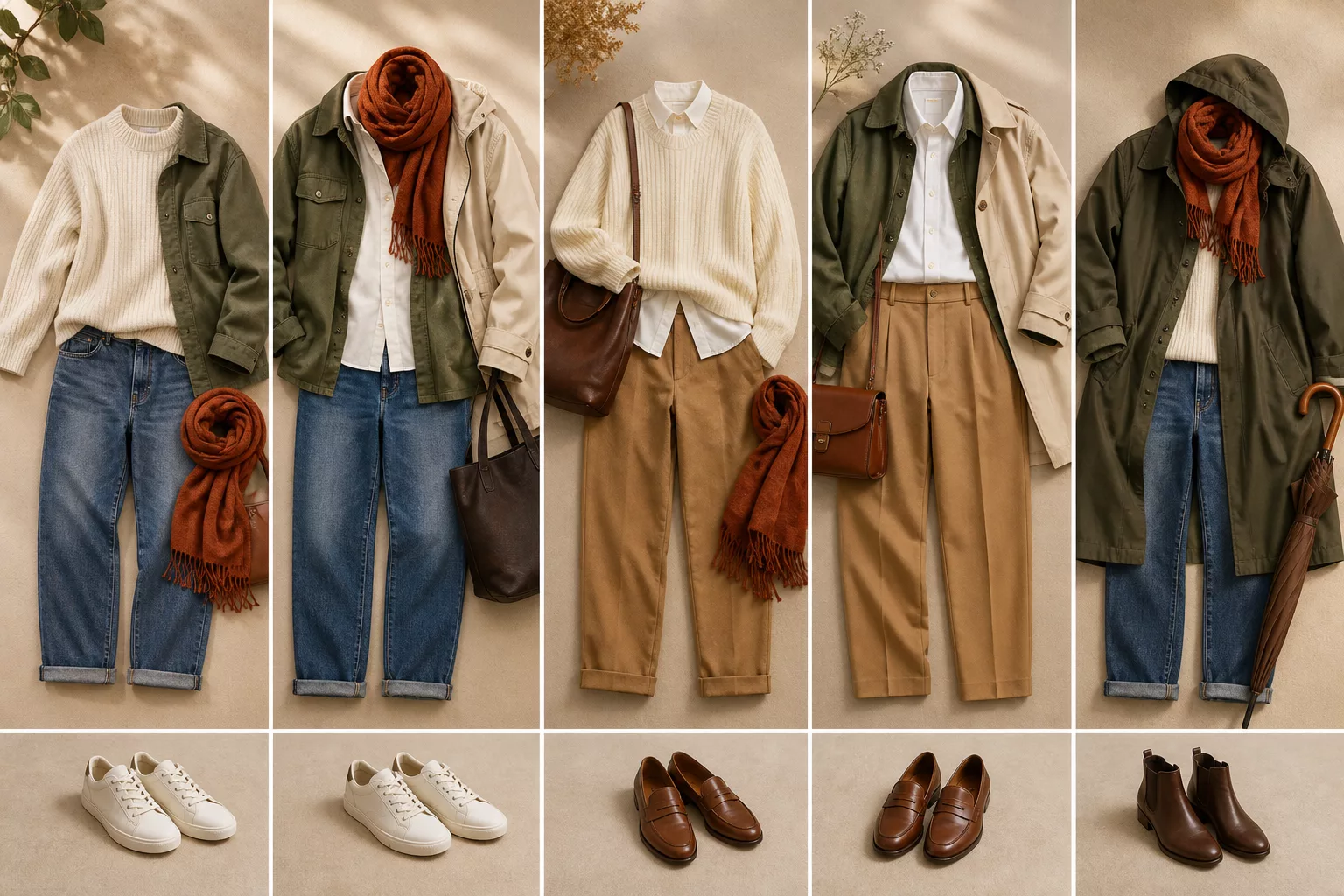
Once you have selected your likely pieces, test them as outfits.
Try creating:
- An outfit for a mild day.
- An outfit for a cold morning and warmer afternoon.
- An everyday casual outfit.
- A slightly dressed-up outfit.
- An outfit suitable for rain or wind.
- An indoor outfit with an optional outdoor layer.
Move around in each combination. Sit down, reach, walk, and put on the intended outer layer. Confirm that the fabrics, proportions, and shoes work together in practice.
Photograph combinations you like or record them in a simple note. This gives you an easy reference on busy mornings and reveals whether an apparent gap is real.
If one item cannot participate in several workable outfits, ask why. The problem could be its color, shape, fabric weight, comfort, or the fact that it belongs to a different part of your life.
Do not automatically buy additional pieces to make one difficult item work.
Create a Confirmed Gap List
After testing your outfits, write down only the problems you could not solve.
For each gap, record:
- The function you need.
- The clothes it must coordinate with.
- The appropriate fabric weight.
- Fit or comfort requirements.
- Preferred colors.
- Weather requirements.
- Whether the need is urgent.
- What you already own that could substitute temporarily.
Instead of writing “buy a fall jacket,” you might write:
Find a lightweight, rain-resistant jacket that fits over my cardigan, works with jeans and dresses, and has secure pockets.
That description provides a useful shopping standard. It also makes it easier to recognize when a tempting item does not meet the need.
This article contains affiliate links. As an Amazon Associate I earn from qualifying purchases. As an eBay Partner, I may be compensated if you make a purchase through links in this article, at no additional cost to you.
If your confirmed gap is a lightweight neutral layer, browse pre-owned Eileen Fisher merino wool cardigans in neutral colors on eBay. Available sizes, condition, construction, and exact fiber content will vary, so verify measurements, condition notes, and the garment label before deciding.
If your confirmed gap is a polished everyday shoe, view the Frye Faith leather loafers on Amazon. Their classic, low-profile silhouette works easily with trousers, jeans, skirts, and dresses. A leather upper and lining provide a refined finish, while the cushioned insole and lightweight rubber outsole make them practical for regular wear. Confirm the materials, sizing, seller, and return terms for the variation you choose.
What to Skip in a Fall Capsule Wardrobe
A thoughtful capsule is shaped as much by what you leave out as by what you include.
Consider skipping:
- An arbitrary garment-count target.
- A complete seasonal wardrobe replacement.
- Multiple versions of the same trendy item.
- Shoes that do not work for your daily walking or weather.
- Heavy layers when most of your fall is mild.
- Special-occasion clothes that rarely leave the closet.
- Pieces that need constant adjustment.
- Anything purchased before you know what gap it fills.
You also do not need to remove every item outside your capsule. Off-season clothes, special-occasion garments, sentimental pieces, and activity-specific clothing can be stored separately without being discarded.
The capsule is your active working wardrobe, not a test of how little you can own.
Flexible Fall Capsule Checklist

Use this list as a set of questions rather than a mandatory shopping guide.
Tops and layers
- Do I have comfortable foundation tops?
- Do I have at least one layer for changing temperatures?
- Can my layers fit over my tops and beneath my outerwear?
- Do I have an option for casual and slightly dressier situations?
Bottoms and one-piece options
- Do my primary bottoms work with several tops?
- Are they comfortable for my normal routine?
- Do I genuinely wear skirts or dresses, or am I adding them because a list says I should?
Outerwear and shoes
- Does my outerwear match my actual fall weather?
- Can it fit over the layers I plan to wear?
- Are my shoes comfortable and suitable for local conditions?
- Do the shoes coordinate with most of the bottoms and dresses?
Coordination
- Can I create several outfits without adding anything?
- Are there enough colors and textures to feel interesting?
- Does each possible purchase solve a documented problem?
- Can I wait and test the wardrobe before buying?
Mark each category as:
- Already own and works
- Needs testing
- Confirmed gap
- Not needed
Frequently Asked Questions
How many pieces should a fall capsule wardrobe contain?
There is no required number. Choose enough clothes to cover your routine between laundry days while maintaining useful outfit combinations. A smaller wardrobe is not better if it cannot support your actual life.
Can summer clothes stay in a fall capsule?
Yes. T-shirts, button-downs, dresses, skirts, denim, trousers, and sneakers can often continue into fall. Their usefulness depends on your climate and how they work with fall layers and shoes.
Does a fall capsule have to use neutral colors?
No. Neutrals can make coordination easier, but a capsule can include any colors that work together and reflect your style.
What if fall is warm where I live?
Prioritize breathable foundations, lightweight layers, and weather-appropriate shoes. Do not buy heavy sweaters or coats merely because they appear on traditional fall checklists.
Do shoes and outerwear count as part of the capsule?
They can, but counting is optional. It is more important that they support the wardrobe and conditions in which you will wear it.
Do I have to remove everything outside the capsule?
No. You can store off-season, sentimental, formal, or activity-specific clothes separately. The goal is to make the active wardrobe easier to use, not to force a dramatic purge.
When should I buy missing pieces?
Buy only after assembling and testing outfits from what you already own. A confirmed gap should describe a specific unmet function, not simply a desire for something new.
A Better Fall Wardrobe Starts With Better Decisions
A useful fall capsule is not the one with the fewest pieces or the most perfect neutral palette. It is the one that helps you get dressed for your real life with less frustration.
Keep what fits, feels good, and works with the rest of your wardrobe. Add only what solves a confirmed problem. Skip the pieces that create more needs than they resolve.
Your wardrobe does not have to look like anyone else’s capsule. It only needs to work for you.
Read Next
New to capsule wardrobes? Start with What Is a Capsule Wardrobe? A Simple Guide to Building a Closet That Works.
Want to get more from the clothes you already own? Read How to Build a Warm Weather Capsule Wardrobe Without Buying More Clothes.
Looking for practical outfit combinations? Explore 10 Warm-Weather Capsule Wardrobe Outfit Formulas.
Join the Conversation
What is one piece you are carrying into fall—and what confirmed wardrobe gap, if any, are you still trying to solve? Share your answer in the comments.
Shop My Curated Finds
Looking for timeless wardrobe staples, natural-fiber pieces, and distinctive secondhand finds?
Visit the Peak Pursuits Marketplace eBay Store
I regularly source premium brands, versatile wardrobe essentials, natural-fiber clothing, and unique resale finds selected for lasting style and everyday wear.