
How to Build a Warm Weather Capsule Wardrobe Without Buying More Clothes
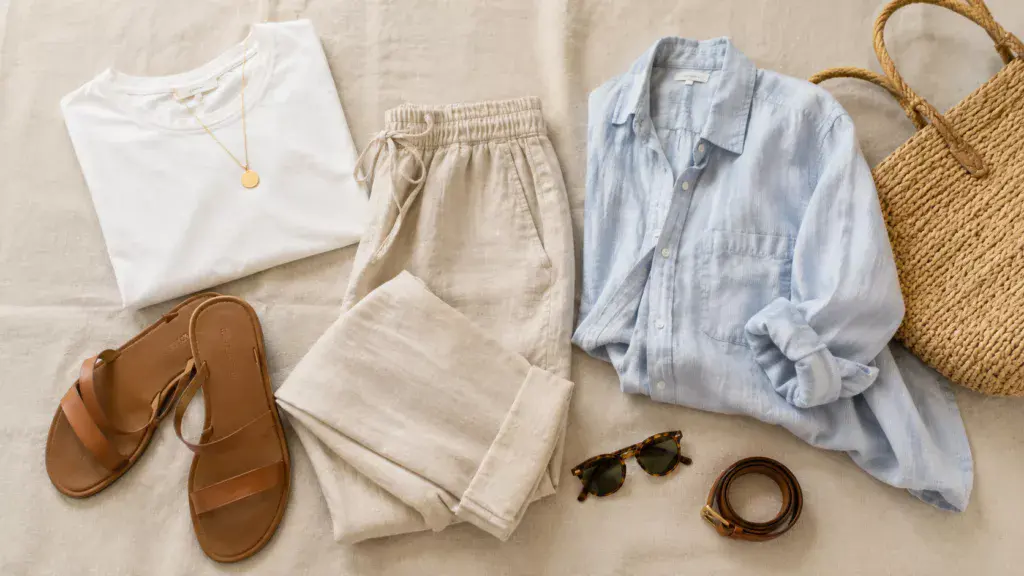
A warm weather capsule wardrobe sounds simple until you stand in front of your closet and realize that plenty of your clothes are technically seasonal, but very few of them feel easy to wear together.
You may own several summer tops but still reach for the same two. You may have linen pants you like, but no outfit formula that makes them feel natural. You may keep buying warm-weather pieces because getting dressed still feels harder than it should.
The good news is that a useful capsule wardrobe does not have to begin with shopping. In many cases, the best warm-weather capsule starts with a better look at what you already own.
Understanding how to build a warm weather capsule wardrobe can transform your dressing experience during the hotter months.
This guide will help you learn how to build a warm weather capsule wardrobe without buying more clothes first. You will audit your closet, identify your most wearable pieces, create outfit formulas, test what actually works, and spot true gaps only after you have used what is already there.
What Is a Warm Weather Capsule Wardrobe?
A warm weather capsule wardrobe is a small, intentional group of clothes that makes dressing easier during warmer months.
It usually includes breathable tops, comfortable bottoms, easy dresses, lightweight layers, practical shoes, and pieces that can be mixed in multiple ways. But a capsule wardrobe is not about creating a perfect minimalist closet. It is about building a wardrobe that works for your real climate, your real schedule, and your real comfort needs.
A useful warm-weather capsule should help you:
- get dressed with less effort;
- stay comfortable in heat, humidity, sun, and air conditioning;
- repeat pieces without feeling stuck;
- create outfits for your actual lifestyle;
- reduce impulse shopping;
- identify what is truly missing.
The most important shift is this: do not start by asking what you should buy. Start by asking what your current clothes can already do.
Start With Your Real Warm-Weather Life
Before you sort your closet, think about the days you are actually dressing for.
A warm-weather capsule for office days, travel, and outdoor dinners will look different from one built for errands, gardening, school drop-off, work-from-home days, or weekend resale shopping. A capsule for dry heat will look different from one for humidity. A capsule for cold air-conditioned buildings needs different layers than one for casual outdoor days.
Ask yourself:
- Where do I go most often in warm weather?
- Which clothes do I avoid when it gets hot?
- Do I need outfits for work, weekends, travel, church, events, or outdoor activities?
- Do I need more sun coverage, more airflow, more polish, or more comfort?
- Which outfits do I already repeat because they feel easy?
This step prevents one of the biggest capsule wardrobe mistakes: building for an imaginary life. A beautiful closet full of white linen and delicate sandals may look appealing, but it will not help if your real days require washable cotton, walkable shoes, and layers that can handle air conditioning.
Your capsule should serve your life, not a mood board.
Pull Out the Pieces You Already Wear Most
Start with the clothes that have already earned their place.
Pull out the warm-weather pieces you wear repeatedly, even if they do not feel special enough to be part of a capsule wardrobe. These pieces are evidence. They show you what feels comfortable, useful, flattering, and familiar.
Look for:
- favorite T-shirts, tanks, and lightweight tops;
- linen, cotton, chambray, or gauze shirts;
- shorts you actually like wearing;
- skirts or dresses you reach for often;
- lightweight jeans, trousers, or pull-on pants;
- sandals, sneakers, flats, loafers, or slides;
- denim jackets, cardigans, linen shirts, or other light layers;
- bags and accessories you use without thinking.
Do not judge the pieces yet. Notice the patterns.
You may discover that you prefer relaxed fits, natural fibers, neutral colors, soft waistbands, sleeveless tops, or dresses because they make warm-weather dressing easier. You may also realize that a few “boring” basics are doing more work than the trendier pieces you thought you needed.
That information is more useful than any generic capsule checklist.
Remember, understanding how to build a warm weather capsule wardrobe is about embracing what you already have.
Sort Your Warm-Weather Clothes Into Four Groups
Once you have pulled out your most-worn pieces, sort the rest of your warm-weather wardrobe into four simple groups.
1. Easy Yes
These are the pieces you wear often, feel good in, and can style without much effort.
Examples might include a white cotton tee, linen pants, denim shorts, a black tank, a striped shirt, an easy dress, or flat leather sandals.
These pieces form the foundation of your capsule.
2. Useful but Underused
These pieces have potential, but you are not wearing them often.
Maybe a button-down shirt feels too polished. Maybe a skirt only works with one top. Maybe a dress needs a better casual shoe. Maybe a pair of trousers feels good, but you have never built easy outfits around them.
Do not donate these pieces too quickly. Test them before deciding they do not belong.
3. Seasonal or Occasion-Specific
These are items you do not need every week but still serve a real purpose.
Examples might include a beach cover-up, wedding guest dress, hiking shorts, sun hat, lightweight blazer, travel outfit, or dressier sandals.
These do not need to live in your daily capsule, but they should remain findable so you do not rebuy similar items later.
4. Not Working Right Now
These are pieces that do not fit, do not feel comfortable, require constant adjusting, feel too worn, or no longer match your life.
You do not have to make a final decision immediately. But move them out of your active closet so they stop creating noise.
A capsule wardrobe is not necessarily your entire wardrobe. It is the part of your wardrobe that is ready to help you get dressed now.
Choose a Simple Color Base From What You Already Own
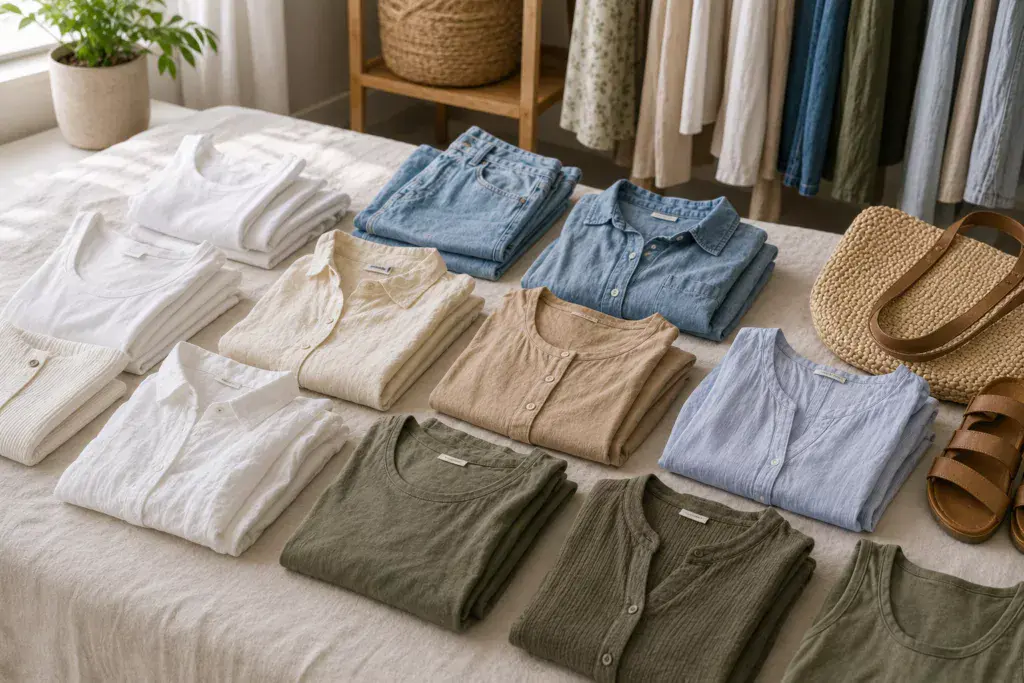
You don’t need a strict color palette, but your capsule will be easier to use if most pieces connect through a simple color base.
Start by looking at the colors you already wear most. Do not force yourself into black, white, beige, or navy if those are not your natural choices.
Your warm-weather base might be:
- white, cream, tan, and denim;
- black, white, olive, and light-wash denim;
- navy, ivory, chambray, and brown;
- gray, white, khaki, and pale blue;
- linen, olive, rust, and cream.
Then add one or two accent colors if you enjoy them. Soft green, coral, red, yellow, blush, cobalt, or pale blue can all work if they repeat naturally across your wardrobe.
The goal is not restriction. The goal is outfit math. When your tops, bottoms, layers, and shoes relate to each other, you can make more outfits with fewer decisions.
Build Around Outfit Formulas, Not Individual Items
A warm-weather capsule becomes useful when you know how the pieces work together. Instead of thinking only in categories like tops, bottoms, and dresses, build outfit formulas.
An outfit formula is a repeatable combination you can use with different pieces.
Here are ten warm-weather outfit formulas you may be able to create from clothes you already own.
1. Simple Top + Linen Pants + Flat Sandals
This is one of the easiest warm-weather formulas because it balances comfort and polish.
Try:
- a cotton tee with linen pants;
- a tank with wide-leg trousers;
- a lightweight sweater with pull-on pants;
- a button-down shirt half-tucked into linen pants.
This formula works for errands, casual lunches, travel days, and work-from-home routines when you still want to feel pulled together.
2. Tank or Tee + Relaxed Shorts + Lightweight Layer
Shorts often feel more intentional when they are paired with a clean top and an open layer.
Try:
- a white tee, denim shorts, and a linen shirt worn open;
- a tank, cotton shorts, and a lightweight cardigan;
- a striped tee, chino shorts, and a denim jacket.
This formula is especially helpful when mornings are cool, indoor spaces are air-conditioned, or you prefer more coverage.
3. Easy Dress + Comfortable Shoes + Simple Accessory
A dress can be one of the most efficient capsule pieces because it does not require matching a top and bottom.
Try:
- a cotton dress with sneakers;
- a linen dress with flat sandals;
- a sleeveless dress with a button-down tied at the waist;
- a T-shirt dress with a crossbody bag.
The best warm-weather dresses are easy to wash, easy to move in, and easy to dress up or down.
4. Button-Down Shirt + Shorts + Sandals
A lightweight button-down can make casual shorts feel more polished without adding much weight.
Try:
- a white cotton button-down with denim shorts;
- a linen shirt with tailored shorts;
- a chambray shirt with white shorts;
- a striped button-down with pull-on shorts.
Wear it tucked, tied, open over a tank, or buttoned normally. One good shirt can create several different outfits.
5. Midi Skirt + Tank + Low-Profile Shoe
A skirt can add variety when you are tired of shorts but still want airflow.
Try:
- a black tank with a cotton midi skirt;
- a fitted tee with an A-line skirt;
- a linen tank with a slip skirt;
- a simple top with a printed skirt you already own.
This formula works best when the waistband is comfortable and the shoe choice keeps the outfit practical.
6. Lightweight Jeans + Breathable Top + Summer Shoe
Jeans can still belong in a warm-weather capsule if they work for your climate, evenings, or indoor routine.
Try:
- straight-leg jeans with a linen tank;
- white denim with a cotton tee;
- cropped jeans with a button-down;
- light-wash denim with a sleeveless blouse.
Choose lighter washes, relaxed fits, cropped lengths, or breathable tops to make denim feel more seasonal.
7. Matching Color Column + Open Layer
A color column means wearing similar colors on top and bottom, then adding a contrasting layer.
Try:
- black tank and black skirt with a white linen shirt;
- white tee and white jeans with a denim jacket;
- navy top and navy shorts with a tan cardigan;
- cream tank and cream pants with a chambray shirt.
This is a simple way to make basics feel more styled without buying anything new.
8. Swimsuit or Base Layer + Cover-Up + Easy Bottom
For beach days, pool days, or hot vacation days, your capsule may need transitional outfits.
Try:
- a swimsuit with linen pants and an open shirt;
- a tank or bodysuit with pull-on shorts;
- a cover-up dress with flat sandals;
- a lightweight button-down over a tank and shorts.
This helps you avoid buying “vacation clothes” that only work once.
9. Lightweight Layer + Dress + Casual Shoe
Many warm-weather outfits only work in direct heat. A layer helps with cool evenings, air conditioning, travel, and sun coverage.
Try:
- a denim jacket over a cotton dress;
- a linen shirt over a tank dress;
- a lightweight cardigan over a sleeveless dress;
- a cropped jacket over a midi dress.
The best layer is one you can carry easily and wear with more than one outfit.
10. Repeated Base + Changed Accessories
This is one of the most overlooked capsule formulas.
Start with a simple base:
- white tee and linen pants;
- black tank and shorts;
- cotton dress;
- striped tee and jeans.
Then change the finishing pieces:
- sandals instead of sneakers;
- tote instead of crossbody;
- open shirt instead of no layer;
- belt instead of no belt;
- simple jewelry instead of a scarf.
This lets you repeat your strongest outfits without feeling like you are wearing the exact same thing every day.
Use the Three-Outfit Test Before You Buy Anything
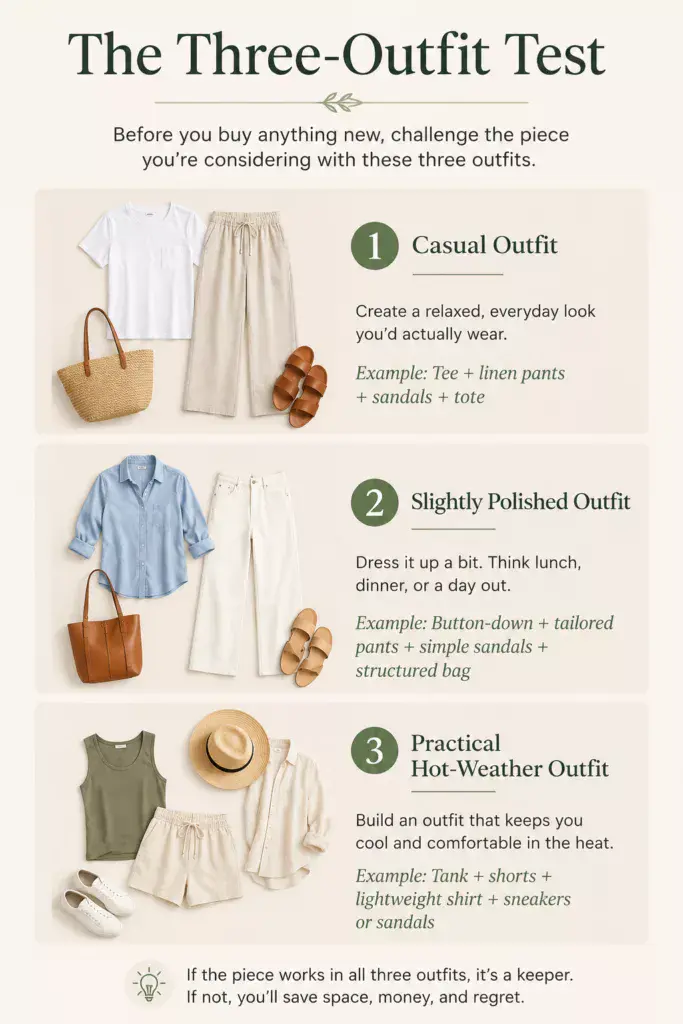
Before adding a new piece, test your current wardrobe with the three-outfit test.
Choose one item you think you need more of. Then see whether you can create three outfits with what you already own:
- one casual outfit;
- one slightly polished outfit;
- one practical hot-weather outfit.
For example, if you think you need new linen pants, test the lightweight bottoms you already own first. Can they work with a tee, a button-down, and a dressier top? Can they pair with your real shoes? Can you wear them for the places you actually go?
If you can create three outfits you would genuinely wear, you may not need a new item. You may just need to make those outfits easier to see.
If you cannot create three outfits, identify the reason.
Is the issue color, fit, fabric, shoes, undergarments, lifestyle, or comfort? That answer matters more than the item itself.
Make a Small Outfit Menu
Once you have tested your pieces, write down 8 to 12 warm-weather outfits you can already make.
Your outfit menu might look like this:
- white tee + linen pants + sandals;
- black tank + cotton skirt + flats;
- striped shirt + shorts + sneakers;
- cotton dress + denim jacket + sandals;
- button-down shirt + jeans + slides;
- tank + pull-on shorts + linen shirt;
- easy dress + sneakers + crossbody bag;
- lightweight trousers + sleeveless top + loafers.
Keep the list on your phone, in your closet, or in a notes app. On busy mornings, an outfit menu saves you from starting over.
A capsule wardrobe does not work because every item is perfect. It works because you have already made decisions before you are rushed, tired, or overheated.
Consider Climate, Fabric, Fit, and Comfort
Warm-weather dressing is not only about style. Heat, humidity, sun exposure, sweat, movement, and laundry all matter.
Climate
If you live somewhere dry, lightweight denim, cotton knits, and linen layers may work well. If you live somewhere humid, you may prefer looser fits, sleeveless tops, breezy dresses, and fabrics that do not cling.
If your days include cold air conditioning, include at least one light layer that works with several outfits.
Fabric
Cotton and linen are popular warm-weather fabrics because they often feel breathable and easy to wear. But they are not perfect for every situation.
Linen wrinkles. Cotton can hold moisture. Rayon or viscose can feel light but may require more careful washing. Performance fabrics can be useful for active days, but they may not create the look you want for everyday outfits.
Choose fabrics based on your climate, laundry habits, movement, and comfort.
Fit
Warm-weather clothes often feel better with a little ease.
Look for:
- waistbands that do not dig;
- armholes that allow movement;
- shorts that do not ride up constantly;
- dresses that work with your preferred undergarments;
- tops that can be tucked, untucked, or layered.
Comfort
Comfort is not separate from style. If a piece only looks good while you are standing still, it probably will not become a dependable warm-weather staple.
A useful capsule should help you move through your day without constant adjusting.
Identify Real Gaps Only After Testing
After you sort, style, and test your existing clothes, you may still find a few true gaps. That is normal.
A real gap is not “I saw something cute.” A real gap is “I have multiple outfits that would work better if I owned this specific type of piece.”
Examples of real warm-weather capsule gaps might include:
- a breathable neutral top that works with three bottoms;
- comfortable sandals you can actually walk in;
- a lightweight layer for air conditioning;
- a simple dress for errands and casual dinners;
- shorts that fit comfortably and pair with existing tops;
- a natural-fiber button-down that can be worn open or tucked.
When you identify a gap, describe it clearly before shopping.
Instead of writing “buy summer top,” write:
“Lightweight white or ivory cotton top, not sheer, works with linen pants, denim shorts, and black skirt.”
That kind of clarity helps you avoid buying another almost-right item.
Shop Your Closet Before You Shop Anywhere Else
Before looking online or in stores, do one more pass through your own closet, storage bins, laundry pile, and off-season pieces.
You may already own the missing item, but it may be hidden because:
- it needs steaming;
- it is stored with another season;
- it needs a small repair;
- it was styled in a way that no longer feels current;
- it belongs with a different outfit formula than you expected.
Try restyling underused pieces before replacing them. A button-down you never wear to work may become your best summer layer. A dress that felt too formal may become casual with flat sandals. A skirt that felt difficult may work with a plain tank instead of a blouse.
This is where a capsule wardrobe becomes sustainable: not by owning nothing, but by using what already exists more thoughtfully.
When Secondhand Shopping Makes Sense
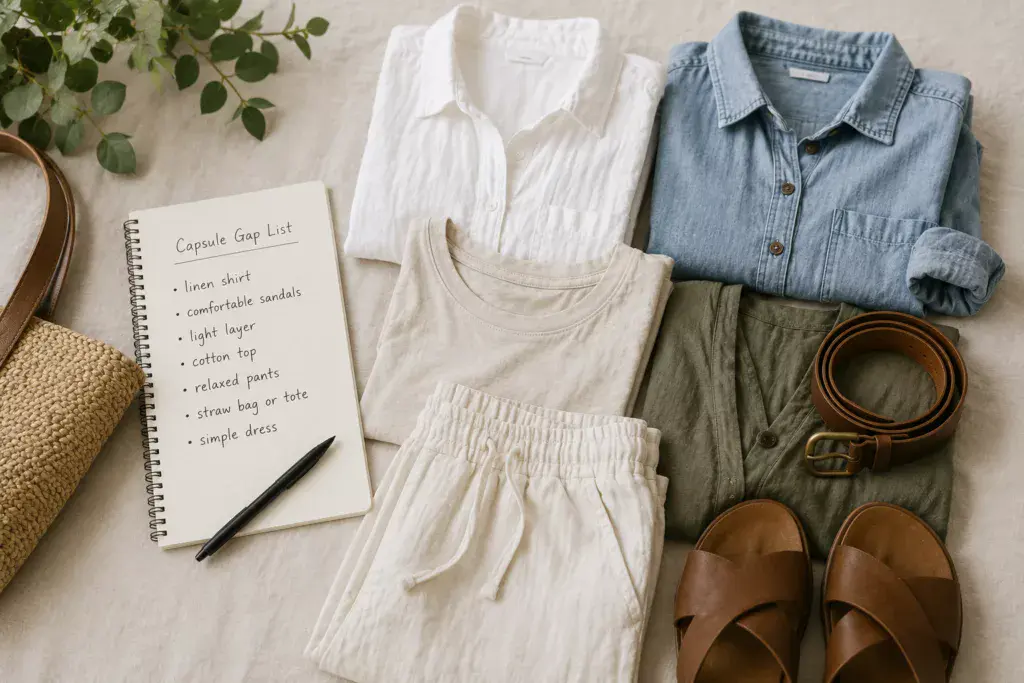
This article is about building without buying more clothes first. But after you test your wardrobe, secondhand shopping can be a smart way to fill true gaps.
Secondhand can be especially useful for:
- linen shirts;
- cotton button-downs;
- denim jackets;
- leather belts;
- quality sandals;
- cotton sweaters;
- silk or cotton scarves;
- classic dresses;
- premium basics from durable brands.
The key is to shop from a specific gap list, not from boredom.
Search by fabric, measurements, color, and silhouette. Compare the item against at least three outfits you already own before purchasing. If it cannot work with your current wardrobe, it is not filling a capsule gap. It is starting a new problem.
Common Warm Weather Capsule Mistakes
Buying a Capsule Instead of Building One
A capsule wardrobe is not a pre-made shopping list. Buying someone else’s ideal summer wardrobe can leave you with pieces that do not fit your body, climate, budget, or lifestyle.
Start with what you already wear. Then build from there.
Choosing Pieces That Only Work One Way
A beautiful top that only works with one skirt may not be a strong capsule piece. Prioritize items that can work with multiple bottoms, shoes, and layers.
Ignoring Shoes
Shoes often determine whether a warm-weather outfit actually works. A capsule with good clothes and uncomfortable shoes will still feel incomplete.
Choose shoes based on your real walking, weather, and comfort needs.
Keeping Too Many “Maybe” Pieces in Your Active Closet
Maybe pieces create decision fatigue. If something is not working right now, move it out of the daily section. You can revisit it later without letting it clutter your current capsule.
Forgetting About Laundry
If you sweat often, travel, garden, commute, walk a lot, or care for kids, laundry matters. A capsule should include enough washable pieces to support your real week.
Treating Neutrals as Mandatory
Neutral colors can make mixing easier, but they are not required. A capsule can include color if the colors repeat and coordinate. The best palette is one you actually wear.
A Simple Warm Weather Capsule Starter List From Your Own Closet
Use this as an audit list, not a shopping list.
Look for:
- 3 to 5 breathable tops;
- 2 to 4 bottoms;
- 1 to 3 dresses or one-piece outfits;
- 1 to 2 lightweight layers;
- 2 to 3 pairs of warm-weather shoes;
- 1 everyday bag;
- 1 to 3 accessories that help finish outfits.
Your version may include more dresses, fewer shorts, more work pieces, or more casual layers. The exact number matters less than whether the pieces can create outfits you will actually wear.
Frequently Asked Questions
How many pieces should be in a warm weather capsule wardrobe?
There is no perfect number. Many people can build a useful warm-weather capsule with a small group of active pieces, but the right amount depends on your lifestyle, laundry routine, climate, and how often you like to repeat outfits.
Start by building 8 to 12 outfits from what you already own. That is more useful than aiming for a fixed number.
Can I build a capsule wardrobe if I like color?
Yes. A capsule wardrobe does not have to be neutral.
The key is repetition and coordination. If you love blue, green, red, pink, or yellow, choose colors that work with several pieces you already own. A colorful capsule works best when the accent colors repeat across tops, patterns, accessories, or layers.
What fabrics are best for warm weather?
Cotton and linen are common warm-weather choices because they can feel breathable and comfortable. Lightweight denim, chambray, gauze, jersey, rayon, viscose, and some performance fabrics can also work depending on your climate and routine.
The best fabric is one that feels comfortable, fits your laundry habits, and works for the way you move through your day.
What if my current clothes do not match?
Start by identifying your most repeated colors and outfit bases. Then move pieces that do not work with anything else out of your active closet.
You do not need everything to match. You just need enough connection between tops, bottoms, layers, and shoes to make daily outfits easier.
Should I get rid of everything that is not in my capsule?
No. A capsule wardrobe is your active wardrobe, not your entire clothing life.
You can keep special occasion pieces, sentimental items, off-season clothes, and pieces you are not ready to decide on. The goal is to simplify daily dressing, not force unnecessary decluttering.
Final Thoughts
Building a warm weather capsule wardrobe without buying more clothes is mostly an exercise in paying attention.
You notice what you already wear. You test what can be styled more than one way. You remove the pieces that create daily decision fatigue. You write down outfit formulas that work. Then, only after that, you decide whether a true gap exists.
This approach is slower than buying a new capsule wardrobe, but it is more practical, more sustainable, and usually more accurate. Instead of building a closet around an ideal version of your life, you build one around your real days, real climate, real comfort needs, and real clothes.
Read Next
Next, read: 10 Warm-Weather Capsule Wardrobe Outfit Formulas
If you are still new to capsule wardrobes, start with: What Is a Capsule Wardrobe? A Simple Guide to Building a Closet That Works
Join the Conversation
What is one warm-weather piece already in your closet that you want to style in more ways this season? Let me know in the comments.
Shop My Curated Finds
Disclosure: This post may contain affiliate links. If you buy through my links, I may earn a small commission at no extra cost to you.
If you’re looking for high-quality secondhand fashion, timeless wardrobe staples, and capsule-friendly natural-fiber pieces, check out my eBay store:
I regularly source premium brands, classic wardrobe essentials, linen pieces, cotton staples, and unique resale finds for Peak Pursuits Marketplace.