
Summer-to-Fall Outfits: Easy Formulas Using Clothes You Already Own
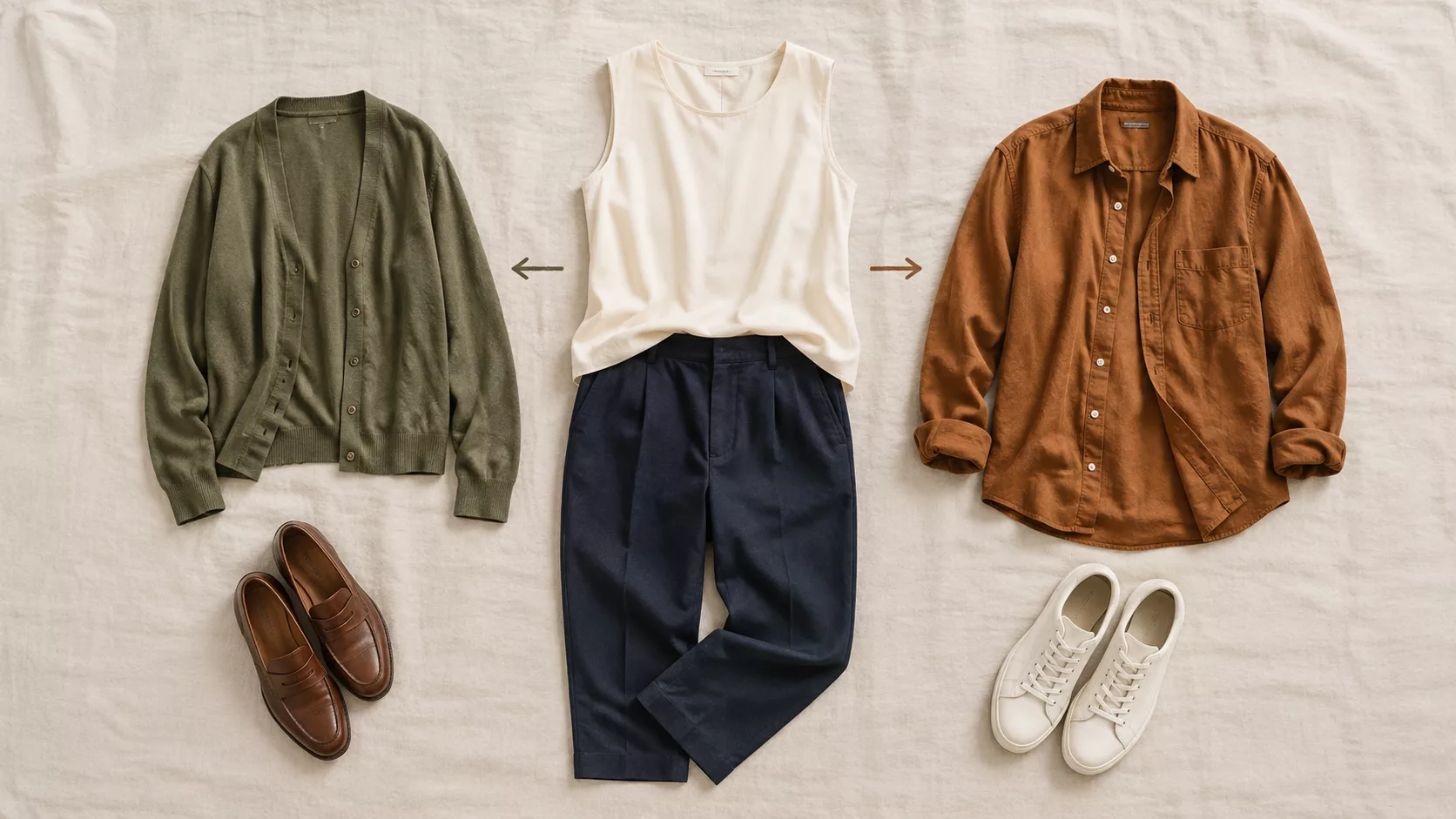
The first cool morning can make a perfectly useful closet feel suddenly wrong. Summer dresses seem too light. Jeans feel too warm by afternoon. A cardigan helps at breakfast, then becomes something you carry for the rest of the day.
You don’t need a separate wardrobe for this short, unpredictable stretch. The easiest summer-to-fall outfits start with combinations you already wear and change only what the weather or setting requires. Think of the season as a series of small swaps, not a full closet reset.
If you haven’t sorted your fall closet yet, start with the keep, add, and skip method in the fall capsule wardrobe guide. Then return here and turn those keepers into outfits.
The simple transition rule: change one variable first
When an outfit works in summer, keep its basic shape. Change one variable first: add a removable layer, switch to a more covered shoe, or introduce a slightly heavier texture. If the day is still warm, one change may be enough. If the temperature drops, make a second change.
This approach keeps an outfit recognizable and comfortable. It also helps you notice whether you have a real wardrobe gap. If the same missing layer or shoe prevents several outfits from working, that may be worth addressing later. One frustrating outfit isn’t proof that you need to shop.
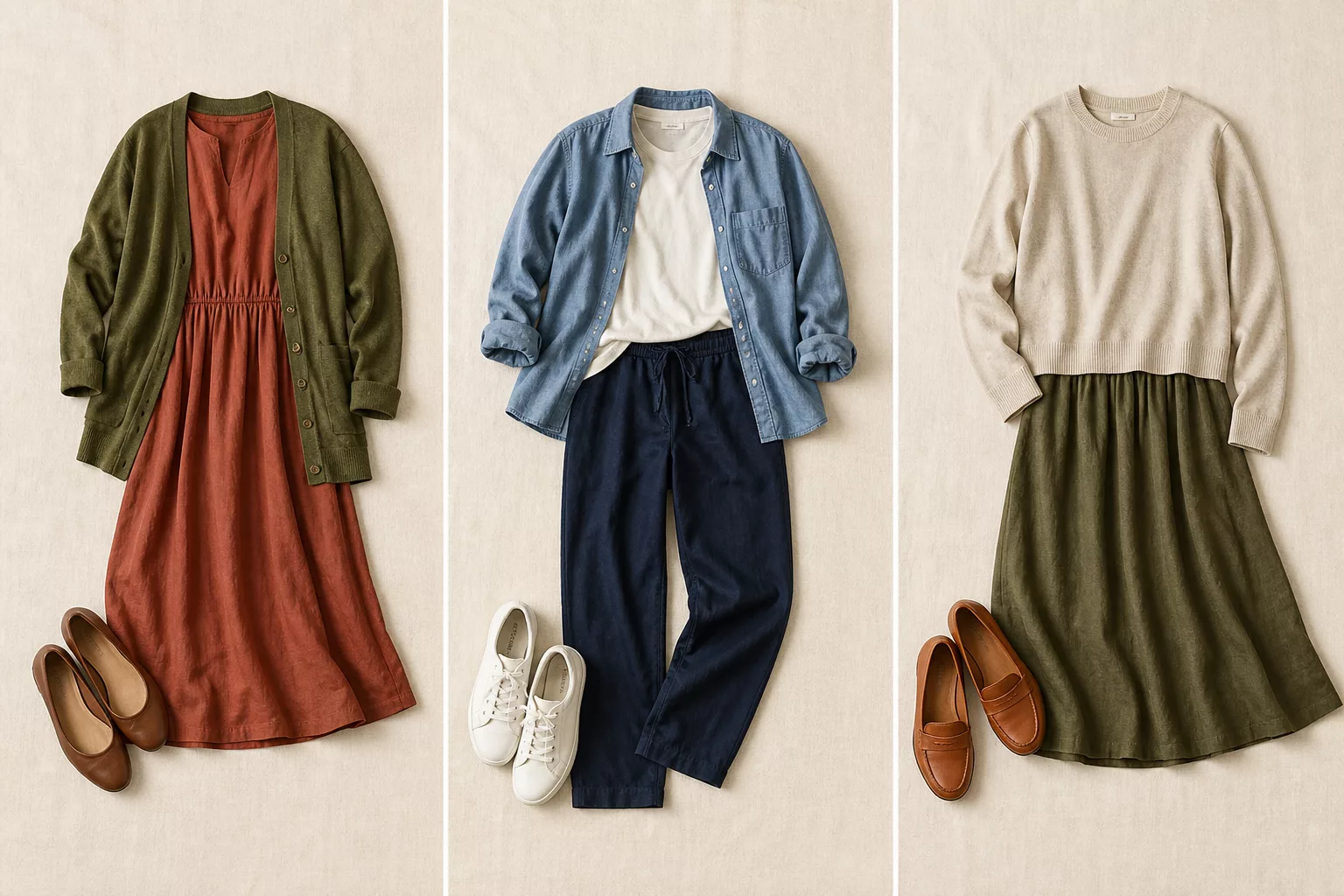
Formula 1: Summer dress + light layer + everyday shoe
dress + cardigan, denim shirt, or blazer + sandal, flat, sneaker, or boot
Start with a dress you already wear comfortably. Add the lightest layer that suits the day: a cardigan for softness, an open denim or chambray shirt for casual structure, or an unlined blazer for work. Keep your summer shoes when the afternoon will still be warm; switch to a flat, sneaker, loafer, or boot when you need more coverage. The outfit should still feel complete after you remove the layer.
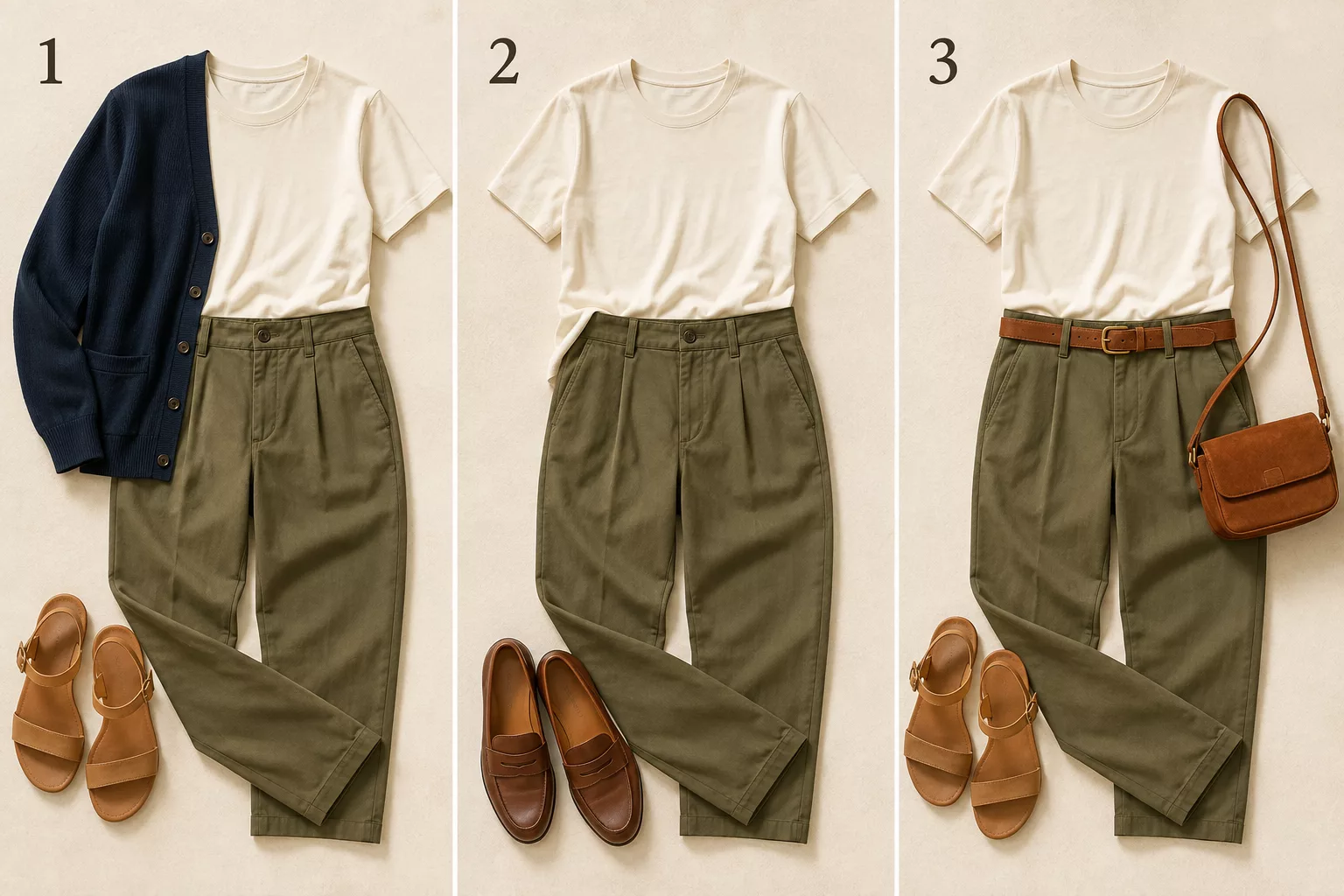
Formula 2: Tee or tank + trousers + removable third piece
simple top + linen, cotton, or lightweight trousers + overshirt or jacket
A familiar tee-and-trouser outfit is an easy bridge between seasons. The third piece does the visual work without forcing you into heavy fabric. Try a button-down worn open, a utility shirt, a cropped jacket, or a relaxed blazer. Roll the sleeves or remove the layer as the day warms. If the trousers already have enough weight, keep the top light rather than adding bulk everywhere.
Formula 3: Summer skirt + knit + grounded shoe
midi or maxi skirt + lightweight sweater or cardigan + closed-toe shoe
Pair a summer skirt with a knit that is light enough to tuck, half-tuck, or wear open. A fitted knit can balance a fuller skirt; a shorter relaxed knit can work with a straighter shape. A loafer, ballet flat, sneaker, or ankle boot makes the outfit feel more grounded, but there is no rule that sandals must disappear on a warm day. Let temperature lead the footwear choice.
Formula 4: Shorts + long sleeve + practical outer layer
shorts + long-sleeve tee or button-down + light jacket
Shorts can stay in rotation while mornings are cool and afternoons are hot. Balance the shorter hem with a long-sleeve top, then carry a jacket for wind or shade. Choose this formula for casual days when exposed legs are comfortable and appropriate. If you spend most of the day in strong air conditioning, lightweight trousers may be the easier version of the same outfit.
Formula 5: Jeans + summer top + one fall texture
jeans + tank, tee, or blouse + suede, leather, corduroy, denim, or knit accent
Jeans already provide visual weight, so the rest can stay light. Wear the summer top you like, then add one texture that suggests fall: a suede belt, leather shoe, corduroy overshirt, denim jacket, or knit draped over the shoulders. You don’t need autumn colors to make the formula work. Texture and coverage can shift the season without turning the outfit into a costume.
Formula 6: Matching set, separated
one piece from a summer set + familiar neutral + removable layer
Extend a warm-weather set by wearing its pieces separately. Pair the shirt with jeans or trousers, or wear the shorts or skirt with a long-sleeve tee and jacket. This creates a new proportion without adding a new category to your closet. If the print feels strongly summery, repeat one of its quieter colors elsewhere in the outfit instead of trying to hide it.
Formula 7: One-piece base + weather-ready top layer
jumpsuit or simple column outfit + overshirt, cardigan, or trench
A jumpsuit—or a same-color top and bottom—creates a simple base for a changing forecast. Add a top layer that can handle the day’s actual conditions. An overshirt works for mild mornings; a cardigan adds warmth indoors; a light trench helps with wind or drizzle. Keep the layer roomy enough to move over the base without pulling or bunching.
How to make any formula work in your climate
The calendar doesn’t decide when an outfit is comfortable. Check the temperature at the time you leave, the likely afternoon high, wind or rain, and how much of the day you will spend indoors. A mountain morning, humid afternoon, air-conditioned office, and coastal evening ask for different versions of the same formula.
Use thin, removable layers when the temperature swing is large. Choose a more protective outer layer when wind or rain is the main problem. If your climate stays hot well into fall, let footwear, texture, and color do more of the seasonal work while the base layers remain breathable.
Three quick checks before you leave
- Does the base outfit still feel complete after I remove the top layer?
- Can I carry or store the layer easily if the afternoon warms up?
- Do the shoes suit the walking, weather, and setting—not just the season?
What not to do
Don’t add every fall signal at once. A heavy sweater, tall boot, wool hat, and dark palette can overwhelm a day that is still mostly warm. Don’t force a summer piece to work if its fabric, fit, or care needs make layering uncomfortable. And don’t buy a special transition item until you can name several outfits it would complete.
If you find a confirmed gap
Test the formulas with what you own first. Consider shopping only if the same missing wardrobe role keeps multiple outfits from working.
This article contains affiliate links. As an Amazon Associate I earn from qualifying purchases, at no additional cost to you. These are optional pathways for confirmed wardrobe gaps, not a reason to replace pieces that already work.
A lightweight longline cardigan
Look for lighter cotton, linen, silk, Tencel, or fine merino construction and a clean silhouette that works with at least three outfits. Verify fiber content, measurements, condition, and total delivered cost. Skip heavy winter knits, unclear details, or condition that doesn’t support the higher-quality price point. Browse Eileen Fisher lightweight longline cardigans on eBay.
Versatile leather loafers
The Vionic Uptown is a lightweight leather loafer with a removable cushioned insole and a shape that works across trouser, skirt, dress, and jeans formulas. It’s best for readers who confirm a genuine loafer gap and want a practical new leather option. Fit, widths, colors, sellers, availability, and return terms can change, so review the current details and consider secondhand first. View the Vionic Uptown leather loafers on Amazon.
A lightweight utility jacket
Look for breathable construction that’s light enough for transitional weather, with room to layer and useful pockets or closures. Verify measurements and condition and make sure it works with at least three outfits. Skip heavy insulation, unclear fabric details, damaged closures, or single-outfit novelty pieces. Search eBay for women’s lightweight capsule utility jackets.
Build a one-week transition lineup
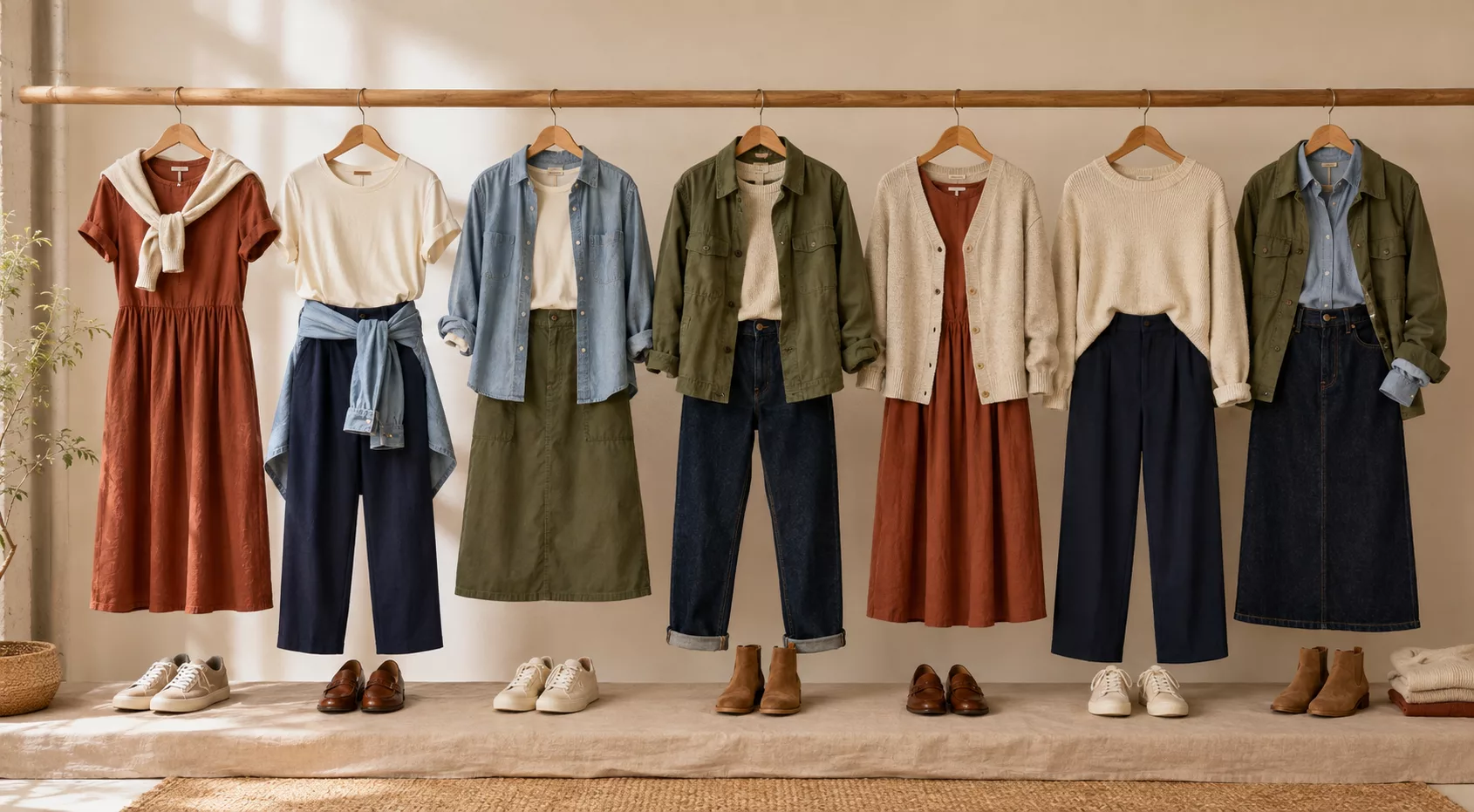
Choose three summer outfits you wore repeatedly. Photograph each one, then make two transition versions: one with a layer and one with a shoe or texture swap. That gives you six adapted combinations. Add one weather-flexible outfit for the coldest or wettest day, and you have seven practical options without starting over.
Need more warm-weather combinations before you adapt them? Review 10 warm-weather capsule wardrobe outfit formulas and choose the formulas that already fit your life.
The goal is continuity, not a seasonal makeover
A useful transition wardrobe is mostly your regular wardrobe responding to a changing day. Keep the outfit shapes you trust. Add warmth in removable increments. Let your climate and routine decide when shoes, layers, and textures change.
When the same formula works across more than one season, you have found something more valuable than a trend: a repeatable way to get dressed with less friction and more use from the clothes you already own.
What to read next
Start with the broader closet method in How to Build a Fall Capsule Wardrobe: What to Keep, Add, and Skip.
Need more warm-weather combinations to adapt? Explore 10 Warm-Weather Capsule Wardrobe Outfit Formulas.
New to capsule wardrobes? Read What Is a Capsule Wardrobe? A Simple Guide to Building a Closet That Works.
Join the conversation
Which summer outfit do you keep wearing into fall—and what is the one change that makes it work for cooler weather? Share your answer in the comments.
Shop my curated finds
Looking for timeless wardrobe staples, natural-fiber pieces, and distinctive secondhand finds?
Visit the Peak Pursuits Marketplace eBay Store
I regularly source premium brands, versatile wardrobe essentials, natural-fiber clothing, and unique resale finds selected for lasting style and everyday wear.